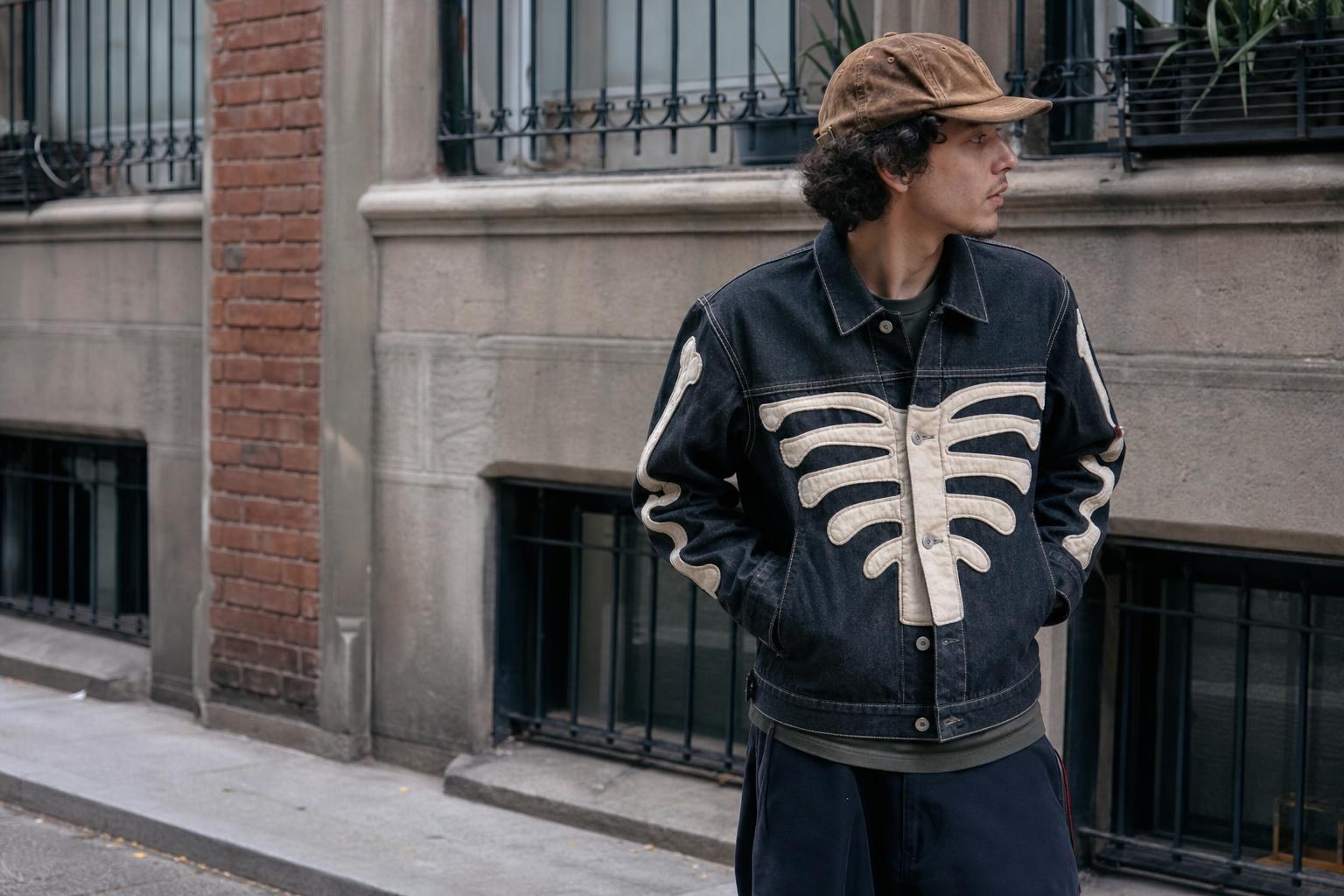
Few garments stop people mid-scroll the way a Kapital bone denim jacket does. There’s something almost confrontational about a hand-distressed, indigo-dyed trucker jacket covered in embroidered skeleton motifs, and that tension between workwear tradition and punk irreverence is exactly why this piece has become one of the most sought-after items in contemporary fashion. Kapital, the Okayama-based label founded by Toshikiyo Hirata in 1984, has spent decades building a reputation for garments that feel lived-in from the first wear, but the Kountry bone jacket stands apart even within their own catalog. It occupies a strange, compelling space: part folk art, part high-fashion statement, part collector’s trophy. Whether you’re considering dropping serious money on one or you already own a piece and want to understand it better, this review covers every angle, from construction details and sizing quirks to resale dynamics and styling possibilities. This is the kind of jacket that demands you know what you’re buying. ## The Heritage of Kapital Kountry and the Bone Aesthetic Kapital’s Kountry line represents the brand’s most expressive, maximalist impulse. While the mainline focuses on beautifully constructed basics rooted in American workwear and military surplus, Kountry takes those same foundations and layers on patchwork, embroidery, boro-inspired distressing, and graphic storytelling. The bone denim jacket is arguably the line’s signature piece, and understanding why requires a brief look at where Kapital comes from and what drives their design philosophy. ### Understanding the Kountry Line’s Artisanal Approach Kapital operates out of Kojima, a district in Okayama Prefecture that has been Japan’s denim heartland since the 1960s. The brand’s proximity to some of the world’s finest shuttle looms and indigo dyeing facilities gives them access to raw materials that most labels simply can’t source. The Kountry sub-label takes this foundation and pushes it through a filter of deliberate imperfection. Garments are hand-distressed, patched with mismatched fabrics, and finished with embroidery that varies slightly from piece to piece. No two jackets are truly identical, which is part of the appeal and part of what justifies the price. The artisanal approach isn’t a marketing gimmick here; it’s baked into the production process at every stage. ### The Cultural Impact of the Skeleton Motif The skeleton, or “bone,” motif draws from multiple traditions simultaneously. There’s the obvious nod to Mexican Day of the Dead imagery, but Kapital filters it through a Japanese wabi-sabi sensibility where beauty exists in decay and impermanence. The dancing skeletons that appear across the jacket’s back panel and chest feel celebratory rather than morbid. They’ve become an instantly recognizable symbol in streetwear and fashion circles, showing up on the backs of collectors from Tokyo to Brooklyn. The motif has transcended its original context to become a kind of tribal marker for people who care about craft, subculture, and wearing something that tells a story. ## Design Details and Construction The bone denim jacket’s appeal goes far beyond its graphics. This is a garment built with the kind of obsessive attention to construction that Japanese denim brands are famous for, and the details reward close inspection. ### Materials and Denim Quality Most iterations of the jacket use Kapital’s proprietary 14-ounce selvedge denim, woven on vintage shuttle looms in Okayama. The fabric has a slightly rough, slubby texture that softens dramatically with wear. Depending on the season and specific release, you’ll find variations in indigo depth, from deep, near-black casts to lighter, pre-faded washes that mimic years of natural aging. The denim itself is the kind that develops high-contrast fades over time, rewarding owners who actually wear their jackets rather than storing them. Some limited editions use 12-ounce denim for a lighter hand, and a few rare releases have featured overdyed or black-washed bases. ### Embroidery and Appliqué Techniques This is where the jacket earns its reputation. The bone motifs are applied using a combination of chain-stitch embroidery and sashiko-inspired hand stitching. On many versions, the skeleton figures are built up from layered appliqué patches, each one cut and stitched individually. The thread colors vary: cream and white bones against dark indigo are the classic combination, but seasonal releases have introduced red, gold, and even glow-in-the-dark thread. The embroidery has real dimension and texture. Run your fingers across the back panel and you can feel each bone raised slightly from the denim surface. It’s this tactile quality that photographs rarely capture and that separates the genuine article from the flood of replicas on the market. ### Hardware and Finishing Touches Kapital uses custom-stamped metal buttons, typically in an antique brass or copper finish. The buttons carry the Kapital logo and are riveted rather than sewn, which adds durability. Interior details include a cotton-lined yoke, branded woven labels with the Kountry designation, and occasionally a small interior pocket with a printed lining. Some versions feature hand-painted details along the collar or cuffs, adding another layer of individuality. The overall finishing quality sits comfortably alongside brands charging twice the price. ## Fit, Sizing, and Comfort Getting the right fit on any Japanese brand can be tricky, and Kapital is no exception. The bone denim jacket runs according to Japanese sizing conventions, which differ meaningfully from American and European standards. ### Navigating Japanese Sizing vs. Western Standards Kapital uses a numbered sizing system (1, 2, 3, 4, and occasionally 5) rather than S/M/L/XL. As a rough guide, size 2 corresponds to a US small, size 3 to a US medium, and size 4 to a US large. But those conversions are approximate. The chest and shoulder measurements tend to run slightly narrower than comparable Western brands, while the body length can be shorter. If you’re between sizes, going up is usually the safer bet, especially if you plan to layer underneath. Always check the specific measurements for the exact release you’re considering, because Kapital adjusts proportions between seasons. Buying secondhand without trying on first is a gamble unless you have your measurements dialed in. ### The Silhouette and On-Body Feel The jacket’s cut is based on a classic Type III trucker silhouette: fitted through the torso with a defined waist and slightly cropped body. The shoulder seams sit right at the bone on most wearers, giving a structured look without feeling boxy. The 14-ounce denim starts stiff but breaks in beautifully after a few weeks of regular wear. Once softened, the jacket drapes with a slight curve at the hem and develops creasing patterns unique to your body. It’s not a relaxed, oversized fit; this jacket looks best when it fits closely, which makes accurate sizing that much more important. ## Styling the Bone Denim Jacket A jacket this visually loud could easily overwhelm an outfit, but the bone denim piece is surprisingly versatile when you approach it with some intention. ### Streetwear vs. High-Fashion Pairings The streetwear approach is straightforward: pair it with wide-leg cargo pants, a plain white tee, and chunky sneakers. The jacket becomes the focal point, and everything else stays neutral. For a more elevated look, try it over a black turtleneck with tailored trousers and leather boots. The contrast between the jacket’s raw, handmade quality and clean, minimal pieces underneath creates real visual tension. Some collectors wear it open over a hoodie for a layered, relaxed look that leans into the Kountry aesthetic. The one pairing to avoid is combining it with other heavily embroidered or graphic-heavy pieces, which creates visual noise rather than a coherent outfit. ### Seasonal Versatility The 14-ounce denim provides enough warmth for spring and fall without overheating. In winter, it works as a mid-layer under a heavier coat, with just the collar and bone motifs peeking out. Summer is the only season where it’s genuinely impractical in most climates, though the lighter 12-ounce versions are more forgiving. The jacket’s indigo dye deepens slightly with exposure to sunlight and wear, so owners who rotate it across three seasons will see the most interesting aging and patina development over time. ## Investment Value and Market Availability The Kapital Kountry bone jacket carries a retail price that typically ranges from $800 to $1,400 depending on the specific release, materials, and level of embroidery. That’s a significant investment, and the secondary market adds another layer of complexity. ### Authenticity Check: Avoiding Replicas Replicas have flooded online marketplaces since around 2022, and some are convincing at first glance. Here’s what to look for when verifying authenticity: – Chain-stitch embroidery on genuine pieces has slight irregularity; machine-perfect stitching is a red flag – Interior labels should include the Kapital logo, size number, fabric composition in Japanese, and a care label with specific washing instructions – Hardware should feel heavy and carry clear logo stamping without blurred edges – The denim itself should have visible selvedge along the interior seams – Purchase from authorized retailers, Kapital’s own stores, or reputable resale platforms like Grailed or Yahoo Japan Auctions with verified seller histories If a deal looks too good to be true, it almost certainly is. Genuine pieces rarely sell below retail unless they show significant wear. ### Resale Value and Long-Term Collectibility Limited colorways and seasonal exclusives routinely sell for 150 to 200 percent of their original retail price on the secondary market. The bone motif jackets from earlier seasons, particularly the first few runs from the mid-2010s, have appreciated the most. Kapital’s deliberate approach to limited production means supply stays tight while demand continues to grow, especially as the brand gains recognition outside Japan. Condition matters enormously for resale: jackets with natural fading and wear are desirable, but stains, tears beyond intentional distressing, or missing buttons will hurt value significantly. ## Final Verdict: Is It Worth the Hype? The Kapital Kountry bone denim jacket earns its reputation through genuine craftsmanship, distinctive design, and the kind of personality that mass-produced fashion simply cannot replicate. It’s expensive, yes, but you’re paying for hand-applied embroidery, premium Japanese selvedge denim, and a garment that will look better in five years than it does today. The sizing requires homework, the care requires patience, and the price requires commitment, but for anyone who values clothing as a form of self-expression and long-term investment, this jacket delivers. If you’re on the fence, try to see one in person before buying. The texture of the embroidery, the weight of the denim, and the small imperfections that make each piece unique are things you need to experience firsthand. Once you do, the price tag starts to make a lot more sense.
The Kapital Kountry Bone Denim Jacket Review
 SHIRTS

コメント