
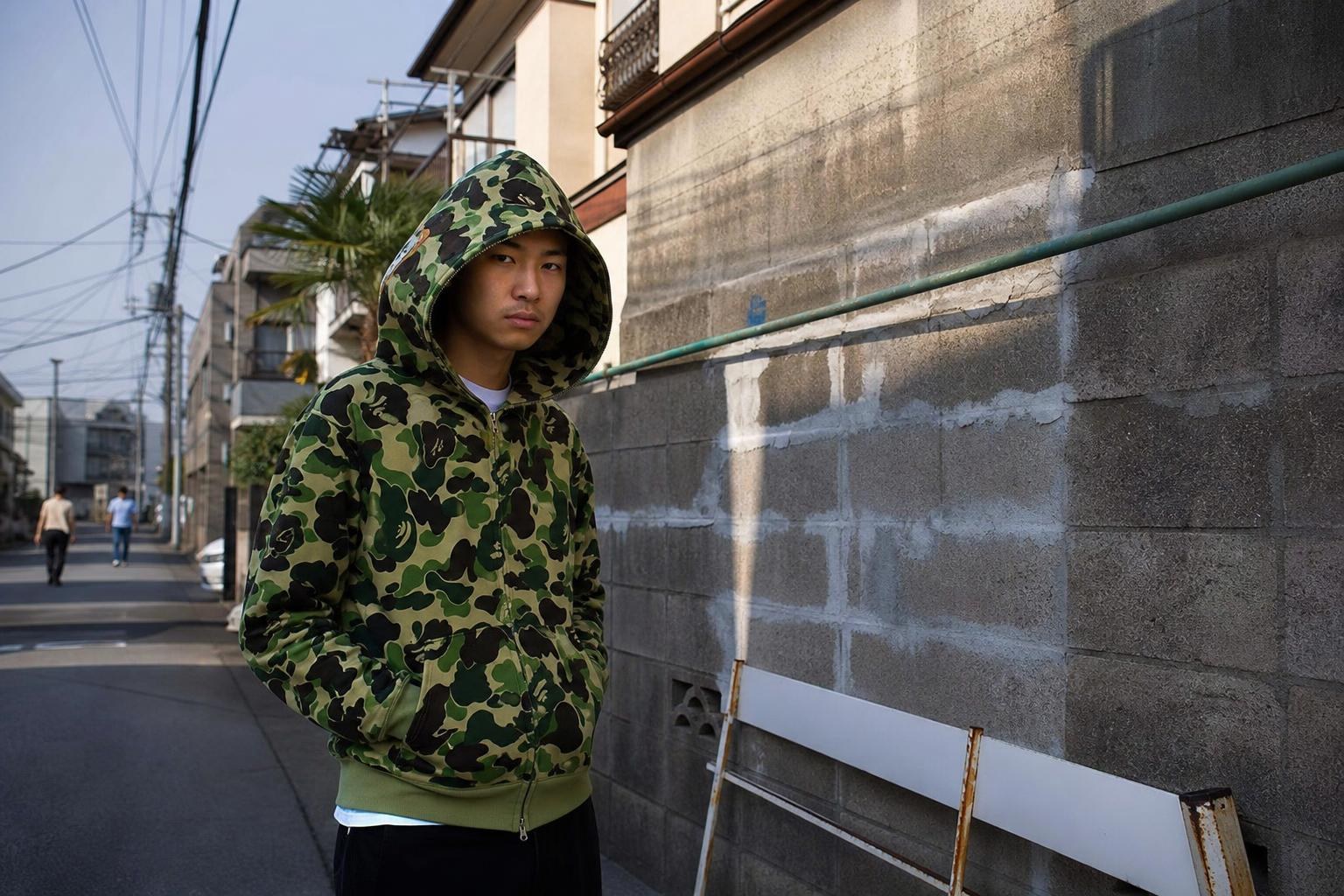
Few garments carry the weight of an entire subculture on their zippers quite like a BAPE camo full zip hoodie from the 1990s. These pieces weren’t just clothing: they were entry points into a world that fused Japanese obsession with American culture, hip-hop bravado, and an almost cultish devotion to exclusivity. A vintage BAPE camo hoodie from this era tells a story about how a small shop in a Tokyo backstreet rewrote the rules of fashion, scarcity, and cool. Three decades later, those original pieces remain some of the most sought-after items in streetwear history, commanding prices that rival fine art prints. Understanding why requires going back to the very beginning, to a neighborhood most people outside Japan had never heard of, and a young DJ who understood desire better than almost anyone in fashion. ## The Birth of a Cultural Icon in Ura-Harajuku ### Nigo’s Vision and the Founding of A Bathing Ape Tomoaki Nagao, known universally as Nigo, launched A Bathing Ape in 1993 from the back streets of Harajuku, a district already buzzing with independent fashion energy. The name itself was a sly reference to the Japanese proverb “a bathing ape in lukewarm water,” a dig at the complacent consumerism Nigo saw around him. His mentor, Hiroshi Fujiwara, the godfather of Ura-Harajuku, had already laid the groundwork by championing a remix culture that pulled from American workwear, hip-hop, punk, and military surplus. Nigo absorbed all of it and then added something distinctly his own: an obsessive attention to graphic identity and an almost pathological commitment to limited production. The first BAPE products were simple printed tees, produced in runs so small they barely registered as a business. But the response from Tokyo’s fashion-forward youth was immediate and intense. ### The Scarcity Model and Early Japanese Streetwear Scene Nigo understood something that luxury houses in Paris and Milan were only beginning to grasp: artificial scarcity creates real desire. Early BAPE drops were limited to a few dozen pieces, sold only from the Busy Work Shop in Ura-Harajuku, with no signage on the door. You had to know where to go. You had to know someone. This wasn’t marketing strategy borrowed from a textbook; it was instinct, shaped by Nigo’s own collector mentality around vintage American goods, sneakers, and records. By the mid-90s, lines formed hours before the shop opened. Japanese magazines like Boon and Asayan began featuring the brand, but Nigo refused to expand distribution. The result was a feedback loop of hype and hunger that turned every BAPE release into an event. This model would later be adopted by Supreme, Palace, and dozens of others, but BAPE did it first and arguably did it best. ## Design Philosophy of the 1st Camo Pattern ### Mankey’s Artistic Influence on the Ape Head Camouflage The 1st Camo pattern, introduced in 1996, became BAPE’s most recognizable design element. Created by graphic designer SK8THING (Shinichiro Nakamura), the pattern embedded the brand’s signature ape head silhouette within a traditional woodland camouflage layout. Look closely at any authentic piece and you’ll spot the ape heads scattered among the organic shapes, a detail that separated BAPE camo from any military surplus store find. The colorways were deliberately non-military. While the original green camo nodded to its utilitarian roots, subsequent releases in purple, blue, pink, and orange made the pattern’s intentions clear: this was camouflage designed to stand out, not blend in. Each colorway was produced in extremely limited quantities during the 90s, which is why original pieces in uncommon colors now fetch extraordinary premiums on the resale market. ### Subverting Military Aesthetics for Urban Fashion Military aesthetics have cycled through fashion for over a century, but BAPE’s approach was different from what designers like Helmut Lang or Raf Simons were doing in Europe during the same period. Where European designers deconstructed military garments to make anti-war statements, Nigo treated camo as pure pop art. The 1st Camo pattern was playful, almost cartoonish, stripping away the seriousness of military dress and replacing it with the irreverence of street culture. This subversion resonated deeply in Japan, a country with a complicated relationship to its own military history. BAPE camo wasn’t about war or protest. It was about identity, about signaling membership in a tribe that valued creativity and exclusivity over everything else. ## Anatomy of the 90s Full Zip Silhouette ### Evolution of the Shark Face and Tiger Motifs The full zip hoodie format became BAPE’s signature canvas, and the evolution of its design through the late 90s tells a story of escalating ambition. Early full zips were relatively understated: solid colors or simple 1st Camo prints with the ape head logo on the chest. But by 1998 and into the early 2000s, Nigo introduced the Shark Hoodie, featuring a menacing shark face that wrapped across the hood when zipped to the top. The Tiger Hoodie followed with a similar concept but different graphic language. These designs transformed the hoodie from a basic layering piece into a wearable sculpture. The zip-up-and-disappear functionality of the Shark face, where the wearer’s entire head became part of the graphic, was genuinely novel. No other brand was doing anything comparable at the time. The 90s-era versions of these pieces, identifiable by their specific tag styles and construction details, are the holy grail for collectors of vintage BAPE camo full zip hoodies. ### Quality Standards and Manufacturing in Early BAPE Production quality in 90s BAPE was remarkably high for a streetwear brand. All manufacturing took place in Japan, using heavyweight cotton fleece that typically measured between 12 and 14 ounces. YKK zippers were standard, and the screen printing on camo pieces had a thick, tactile quality that’s noticeably different from the thinner digital prints found on later production runs. Interior construction featured clean seam finishing, and the cotton itself had a density that held its shape through years of wear. The drawstrings were thick cotton cord, not the thinner polyester strings that became common in post-2010 production. These material differences are one of the primary ways collectors distinguish genuine 90s pieces from later reissues or counterfeits. ## Global Expansion and Hip-Hop’s Co-Sign ### The Influence of The Neptunes and Pharrell Williams BAPE might have remained a Tokyo secret if not for Pharrell Williams. The Neptunes producer discovered the brand during trips to Japan in the late 90s, and by 2001 he was wearing BAPE constantly in music videos, at award shows, and in press appearances. His visibility was enormous: The Neptunes produced roughly 43% of songs played on American radio in 2003, and Pharrell’s style was scrutinized by millions. The effect on BAPE was immediate and dramatic. American demand exploded overnight, but supply remained tightly controlled. Pharrell’s relationship with Nigo went beyond endorsement; the two became genuine collaborators, eventually launching the BAPE STA sneaker line and the Ice Cream/Billionaire Boys Club brands together. This partnership gave BAPE a credibility in hip-hop circles that money alone could never have purchased. ### BAPE’s Transition from Tokyo Secret to Global Status Symbol By 2004, BAPE had opened stores in New York and London, and the brand’s camo pattern was recognizable worldwide. Jay-Z, Kanye West, Lil Wayne, and virtually every major hip-hop artist of the era wore BAPE regularly. The full zip hoodie, particularly in Shark and 1st Camo variants, became a status symbol on par with designer watches or luxury cars in certain communities. This global expansion came with growing pains. Counterfeiting became rampant, particularly from factories in China producing near-identical replicas. The flood of fakes actually increased the value of verifiable authentic pieces, especially those from the 90s era that predated the worst of the counterfeit wave. Nigo eventually sold a 90% stake in the company to Hong Kong’s I.T Group in 2011, ending his direct involvement but cementing the brand’s place in fashion history. ## The Lasting Legacy and Collectibility of Vintage Camo ### Identifying Authentic 90s Tags and Stitching Authentication of 90s BAPE pieces requires attention to several specific markers. Original tags from this era feature a “Made in Japan” designation with a specific font and spacing that changed after 2000. The interior neck tag should display the “A Bathing Ape” text in a clean, evenly spaced typeface, with a gold or silver colorway depending on the season. Key authentication details to examine: – Interior care tags printed on woven fabric, not paper or heat-transfer labels – Screen-printed graphics with a raised, slightly textured feel when you run your finger across them – YKK-branded zipper pulls with consistent tooth spacing – Heavyweight cotton body that feels noticeably denser than modern streetwear hoodies – Stitching with consistent gauge and no loose threads at stress points The ape head embroidery on authentic pieces shows tight, clean stitch work with no fraying at the edges. Fakes from this period tend to have slightly oversized or misshapen ape head logos. ### The Resale Market and Modern Streetwear Relevancy The market for authentic 90s BAPE camo hoodies has grown steadily through the 2020s. Deadstock pieces in original packaging can command $2,000 to $5,000 depending on colorway and size. Even well-worn examples with visible fading and pilling regularly sell for $800 to $1,500 on platforms like Grailed, Yahoo Auctions Japan (accessible via proxy services like Buyee or Zenmarket), and Mercari Japan. Rarity drives pricing more than condition in many cases. Purple and orange 1st Camo colorways from 1997 or 1998 are exceptionally scarce, and confirmed authentic examples in any condition generate intense bidding. The brand’s continued relevance through collaborations with Adidas, Coach, and others keeps introducing new audiences to BAPE’s archive, which in turn pushes vintage prices higher. ## Why These Hoodies Still Matter The story of the BAPE camo full zip hoodie is really a story about how fashion, music, and scarcity intersect to create objects that transcend their material value. A 90s vintage BAPE hoodie is cotton, thread, and a zipper. But it’s also a piece of cultural evidence: proof that a young DJ in Tokyo could build something powerful enough to reshape global streetwear for decades. For collectors, the appeal goes beyond nostalgia. These pieces represent a moment when streetwear was genuinely underground, when owning the right hoodie meant you were connected to a network of taste and knowledge that couldn’t be bought at a mall. If you’re hunting for one, do your homework on authentication, buy from reputable sellers with clear provenance photos, and don’t be afraid to pay a premium for a piece you can verify. The real ones aren’t getting any easier to find.
The History of the 90s BAPE Camo Full Zip Hoodie
 SHIRTS

コメント