
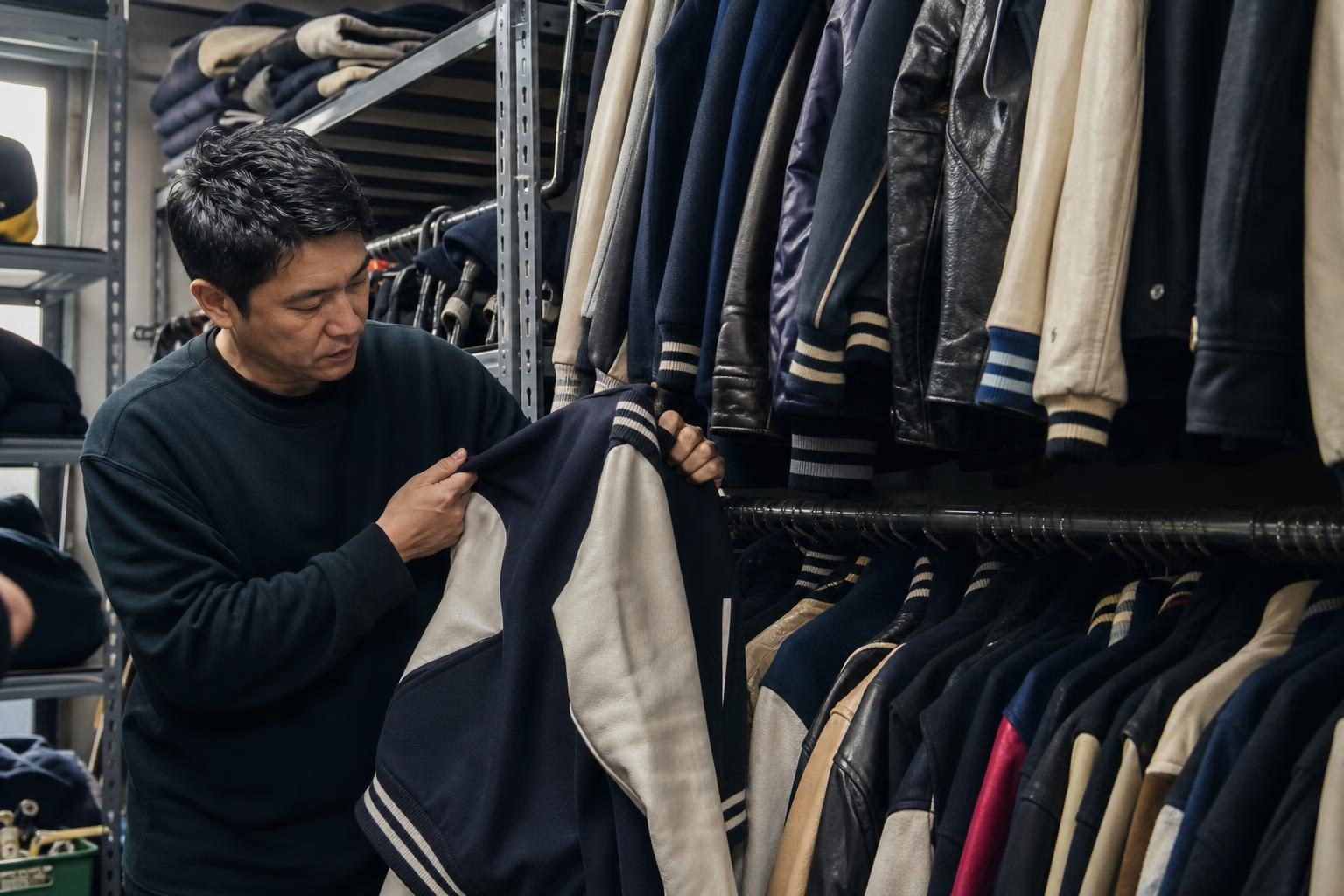
Few labels from the early 1990s carry as much quiet authority as Goodenough. While brands like A Bathing Ape and Undercover eventually became household names in fashion circles, Hiroshi Fujiwara’s Goodenough operated in a deliberate shadow, producing pieces that were never meant for mass consumption. Among its most coveted output, the varsity jacket stands as a near-mythical artifact of Japanese streetwear’s founding era. Collectors who have spent years assembling a 90s Goodenough varsity jacket archive know that each piece tells a story about a time when Tokyo’s backstreet boutiques were quietly rewriting the rules of casual fashion. These jackets weren’t just clothing; they were statements of belonging to a subculture that prized taste over logos, scarcity over saturation, and craftsmanship over hype. Understanding what makes them special requires going back to the source: the man, the movement, and the garments themselves. ## The Genesis of Hiroshi Fujiwara’s Goodenough Hiroshi Fujiwara didn’t stumble into fashion. By the late 1980s, he had already established himself as a DJ, a cultural connector, and a figure who moved fluidly between London’s punk scene, New York’s hip-hop underground, and Tokyo’s emerging club culture. When he launched Goodenough in 1990, the brand was less a commercial enterprise and more a personal experiment in what clothing could communicate. Fujiwara wanted to build something that resisted easy categorization, a label that borrowed from American workwear, British subculture, and Japanese precision without ever announcing its influences loudly. The early collections were tiny. Production runs rarely exceeded a few hundred pieces, and distribution was limited to a handful of shops in the Harajuku and Shibuya neighborhoods. This wasn’t accidental scarcity for marketing purposes. Fujiwara genuinely operated on a small scale because he wanted control over every detail, from fabric sourcing to the placement of a single stitch. ### Defining the Ura-Harajuku Aesthetic The term “Ura-Harajuku” translates roughly to “backstreet Harajuku,” and it described both a physical geography and a creative philosophy. While the main drag of Harajuku catered to tourists and mainstream shoppers, the back alleys housed tiny storefronts where Fujiwara, Nigo, Jun Takahashi, and their peers sold limited-run clothing to an initiated audience. Goodenough was central to this ecosystem. The aesthetic was deliberately anti-flashy: muted earth tones, heavyweight fabrics, minimal branding, and silhouettes that referenced American collegiate and military traditions but filtered them through a distinctly Japanese sensibility. What set Ura-Harajuku apart from Western streetwear at the time was its obsessive attention to quality. These designers weren’t screen-printing logos onto cheap blanks. They were commissioning custom fabrics, visiting factories personally, and treating a varsity jacket with the same seriousness a Savile Row tailor might bring to a bespoke suit. ### The Philosophy of Anonymous Design Fujiwara once described his approach as wanting the clothes to speak without shouting. Goodenough pieces rarely featured prominent branding. The label’s name itself was almost self-deprecating, a quiet assertion that the garment was “good enough” to stand on its own merits without needing a flashy logo to justify its existence. This philosophy of anonymous design meant that a Goodenough varsity jacket could sit alongside a vintage Champion hoodie or a pair of Red Wing boots without clashing. It was designed to integrate into a wardrobe, not dominate it. This restraint is precisely what makes identification tricky for modern collectors. Without obvious branding, authenticating vintage Goodenough pieces requires knowledge of specific interior tags, stitch patterns, and production details that only dedicated archivists tend to possess. ## Anatomy of a 90s Goodenough Varsity Jacket The varsity jacket, or “award jacket” as it was sometimes called in Japanese fashion magazines of the era, was a recurring canvas for Fujiwara throughout the decade. Each season brought subtle refinements, but certain core elements remained consistent across the archive. ### Material Selection: Melton Wool and Premium Leathers Goodenough sourced its Melton wool from Japanese mills that produced some of the densest, most tightly woven fabric available in the early 1990s. The standard weight hovered around 32 ounces per yard, significantly heavier than what most American varsity jacket manufacturers were using at the time. This gave the body of each jacket a structured, almost architectural quality that held its shape season after season. Sleeves were typically cut from cowhide or occasionally steerhide, tanned to a soft hand that would develop a rich patina over years of wear. Unlike mass-market varsity jackets that used corrected-grain leather with a uniform finish, Goodenough favored full-grain hides where natural markings and slight imperfections were left visible. The ribbed knit at the collar, cuffs, and waistband was custom-produced to match specific colorways, often in wool-acrylic blends that resisted pilling. ### Signature Chenille Patches and Embroidery Details Where American varsity jackets typically featured school letters or team mascots, Goodenough’s chenille work was abstract and restrained. The most recognizable motif was a stylized “G” rendered in dense chenille stitching, usually placed on the left chest. Some seasons featured patches on the back panel, but these were more common in the mid-to-late 1990s editions. Embroidery details were handled by specialist workshops in Tokyo’s Sumida ward, an area historically associated with textile craftsmanship. Chain-stitch embroidery appeared on select editions, adding texture without overwhelming the garment’s clean lines. Color palettes for patches tended toward tonal combinations: navy chenille on a black wool body, cream on camel, forest green on charcoal. The effect was subtle enough that you might not notice the detailing from across a room, which was entirely the point. ### The Evolution of the Boxy Silhouette Early 1990s Goodenough varsity jackets followed the era’s preference for generous proportions. Shoulder seams sat slightly beyond the natural shoulder line, armholes were cut high for mobility despite the relaxed body, and the overall length hit at or just below the hip. By 1995 or 1996, the silhouette began tightening marginally, reflecting broader shifts in Japanese fashion toward slimmer lines. The 1997 and 1998 editions represent an interesting middle ground: still roomier than what Western brands were producing, but noticeably trimmer than the earliest pieces. Collectors who focus on fit as a dating tool can often narrow down a jacket’s production year within a two-season window just by measuring the chest and shoulder dimensions. ## Key Grails from the Archive Not all Goodenough varsity jackets are created equal. Certain editions have achieved legendary status among collectors, commanding prices that reflect both their rarity and their historical significance. ### The 1991 First Edition Varsity The earliest known Goodenough varsity jacket dates to the brand’s second full season. Produced in a run rumored to be fewer than 50 pieces, the 1991 edition featured a deep navy Melton body with black leather sleeves and minimal branding: just a small woven label inside the collar and a tonal “G” on the left chest. No external tags, no visible brand name. Finding one of these in wearable condition in 2026 is extraordinarily difficult. The few confirmed examples that have surfaced at auction or through private sales in recent years have fetched prices north of $5,000, with pristine specimens reportedly trading hands for considerably more. Authentication relies heavily on the specific interior label construction, which used a satin-weave ribbon with a particular font that Goodenough abandoned after 1993. ### Limited Edition Collaborations and ‘G’ Monograms Throughout the mid-1990s, Fujiwara produced collaborative varsity jackets with a small circle of brands and retailers. A 1994 edition made exclusively for the now-defunct Hectic shop in Harajuku featured a co-branded interior label and a unique olive drab colorway not available in the mainline collection. A 1996 collaboration with Fragment Design (Fujiwara’s own side project) introduced reflective piping along the sleeve seams, a detail that wouldn’t become common in streetwear for another decade. The “G” monogram variations are particularly interesting for archivists. Between 1992 and 1999, Goodenough used at least seven distinct versions of its signature letter, varying in size, font weight, and chenille density. Mapping these variations across seasons has become a niche pursuit among collectors who maintain detailed Goodenough archive records. ## Cultural Impact and the Resale Market The influence of these jackets extends far beyond the garments themselves. They helped establish a template for how streetwear brands could operate: small, intentional, quality-obsessed, and resistant to the pressure of scaling up. ### Influence on Modern Streetwear Giants Nigo has spoken publicly about how Goodenough’s approach directly informed the early years of A Bathing Ape. The emphasis on limited production, the use of premium materials, and the cultivation of an insider community all trace back to what Fujiwara established with Goodenough. Brands like Visvim, WTAPS, and Neighborhood adopted similar philosophies in the late 1990s and early 2000s, creating what became known as the “Urahara” school of design. Even Western labels felt the ripple effects. Supreme’s early varsity jackets from the mid-1990s share DNA with Goodenough’s approach to the form, and Stussy’s shift toward more premium fabrications in the same era was partly a response to what Japanese brands were producing. ### Navigating the Vintage Collector Scene The market for vintage Goodenough varsity jackets is small but fiercely competitive. Most transactions happen through Japanese auction platforms like Yahoo! Auctions Japan, private collector networks, and occasionally through consignment shops in Tokyo’s Shimokitazawa neighborhood. Western platforms like Grailed and eBay see pieces surface periodically, but authentication remains a persistent concern. Prices vary dramatically based on condition, season, and rarity. A common mid-1990s edition in good condition might sell for $1,200 to $2,500. Rare colorways, first editions, and collaborative pieces command premiums that can push well past $5,000. The lack of comprehensive public documentation makes building a reliable archive of Goodenough varsity jackets a genuinely challenging pursuit, which is part of what makes it rewarding. ## Preserving the Legacy of 90s Streetwear The story of the 90s Goodenough varsity jacket archive is really a story about what happens when someone prioritizes craft and intention over commercial ambition. Fujiwara built something that was never supposed to be famous, and that refusal to chase recognition is exactly what made it matter. For collectors, each jacket is a physical record of a specific moment in Tokyo’s creative history, a time when a small group of friends in backstreet shops were building something that would reshape global fashion. If you’re considering starting your own collection, begin by studying the details: learn the tag variations, memorize the chenille styles, and connect with established collectors who can help you avoid costly fakes. The pieces are out there, scattered across closets and storage units from Tokyo to Los Angeles. Finding them takes patience, knowledge, and a genuine appreciation for why they were made in the first place. That combination of obsession and respect is what keeps this particular corner of fashion history alive more than three decades after it began.
Inside the 90s Goodenough Varsity Jacket Archive
 SHIRTS

コメント