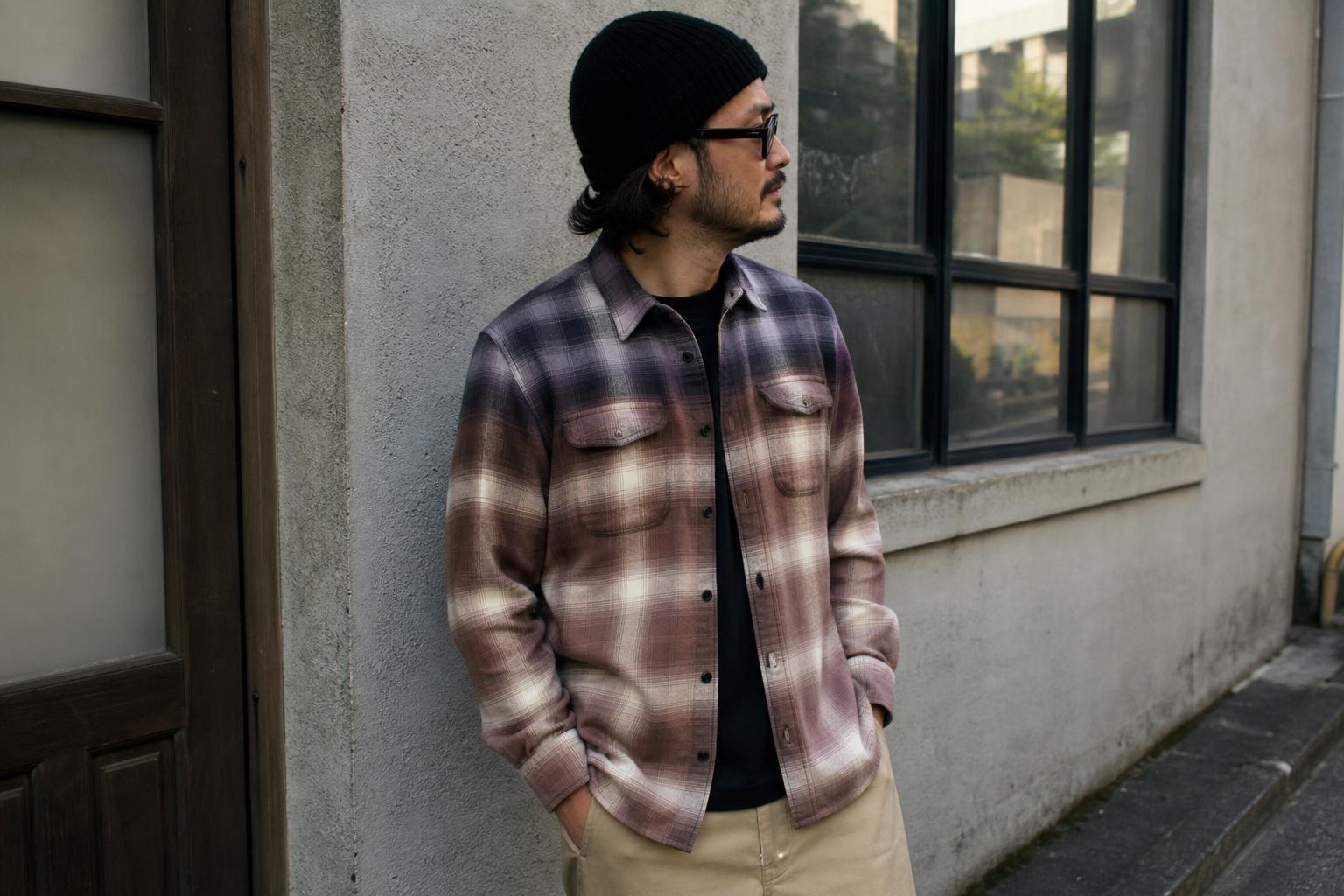

Few Japanese streetwear brands carry the kind of quiet mystique that Corefighter does. Founded in the early 2000s out of Tokyo’s Harajuku district, the label built a reputation on limited runs, heavy fabrics, and designs that borrowed from American workwear without ever feeling derivative. Among its most sought-after pieces is the ombre check border flannel shirt, a garment that has become something of a grail for collectors who appreciate the intersection of vintage Americana and Japanese craftsmanship. If you’ve stumbled across one at a flea market, spotted a listing on Yahoo Japan Auctions, or simply want to understand why these shirts command the prices they do, this guide to the vintage Corefighter archive ombre check border flannel is built for you. The information here draws from years of collector knowledge, auction tracking, and hands-on examination of these pieces across multiple seasons and colorways.
How to Identify the Era & Features
Corefighter operated across roughly three distinct design periods, and understanding which era your ombre check border flannel belongs to will tell you a lot about its construction, rarity, and value.
Early Period (2002-2006): The Foundation Years
The earliest Corefighter flannels are the hardest to find and often the most prized. During this stretch, the brand was still establishing its identity, producing extremely small batches, sometimes fewer than 50 pieces per colorway. The ombre check patterns from this era tend to feature tighter gradient transitions, moving from deep burgundy or navy at the yoke into lighter tones toward the hem. Border detailing, the horizontal stripe pattern that interrupts the ombre fade, is typically narrower and placed higher on the chest.
Look for labels printed in a blocky sans-serif font on a cream-colored cotton tag. The text reads “COREFIGHTER” in all capitals, often accompanied by the katakana rendering コアファイター beneath it. Stitching on these early pieces uses a single-needle construction on the side seams, a detail borrowed from vintage American shirt-making that the brand later moved away from. Buttons are typically a matte shell or a thick urea resin, never plastic. If you see thin, shiny buttons, you’re likely looking at a replica or a much later diffusion piece.
Middle Period (2007-2012): Peak Production
This is when Corefighter hit its stride. The ombre check border flannel became a seasonal staple, appearing in fall/winter collections almost every year with new colorway variations. The gradient work grew bolder: expect wider color bands, more contrast between the check pattern and the border stripes, and a heavier hand-feel to the cotton flannel itself. Some pieces from 2009 to 2011 used a brushed cotton that feels almost like a lightweight blanket.
Labels shifted to a woven tag format during this period, typically black with white embroidered text. The brand name sometimes appeared alongside a seasonal code, like “F/W 09” or “AW-11,” which makes dating these pieces relatively straightforward. Construction quality remained high, though the brand transitioned to chain stitching (チェーンステッチ) on hems and cuffs, a detail that actually adds to the vintage appeal for many collectors. Check for the characteristic puckering along the bottom hem that chain stitching produces after several washes.
Late Period (2013-2018): Refined and Rare
By the mid-2010s, Corefighter had scaled back production significantly. The ombre check border flannel still appeared, but less frequently, and the design language shifted toward subtlety. Color palettes became muted: think olive-to-cream gradients, dusty rose fading into charcoal, and earth tones that reflected the broader trend in Japanese fashion toward understated natural hues.
Labels from this era are the easiest to authenticate because they include a small lot number printed on the interior care tag. If you can cross-reference that number with archived lookbook images from Japanese fashion databases like Fashionsnap or Wear.jp, you can often confirm the exact season. The fabric weight also decreased slightly, making these pieces more wearable year-round but less substantial than their mid-period counterparts.
Authentication Checklist
When examining any vintage Corefighter ombre flannel, run through these markers:
- Label style matches the claimed era (printed cream tag for early, woven black tag for middle, lot-numbered care tag for late)
- Button material is shell or urea resin, never cheap plastic
- Stitching is consistent: single-needle for early pieces, chain stitch for middle and late
- Ombre gradient is smooth with no harsh color breaks, which would indicate a screen-printed imitation
- Border stripe placement is deliberate and symmetrical across both front panels
- Interior seam finishing is clean, with no raw or serged edges on mainline pieces
Fakes do exist, particularly on platforms like Mercari Japan, where sellers occasionally list knockoffs from brands like Coen or Global Work that mimic the ombre check aesthetic. The easiest tell is always the fabric: genuine Corefighter flannel has a density and softness that mass-market alternatives simply cannot replicate.
Market Value & Price Guide for Corefighter Archive Ombre Check Border Flannel Shirt
Pricing for these shirts has shifted considerably over the past few years. The broader resurgence of interest in Japanese archive fashion, driven partly by social media accounts dedicated to 2000s-era Tokyo streetwear, has pushed values upward since roughly 2023. Here’s where things stand as of early 2026.
Current Price Ranges by Era and Condition
Early period pieces (2002-2006) in good condition typically sell between ¥35,000 and ¥65,000 ($230 to $430 USD at current exchange rates) on Yahoo Japan Auctions. Exceptional examples, particularly in rare colorways like the deep indigo-to-white version from 2004, have crossed ¥80,000 in competitive bidding. On Western platforms like Grailed or eBay, expect a 15-25% markup over Japanese auction prices, reflecting the added cost of proxy buying and the premium international collectors are willing to pay.
Middle period shirts (2007-2012) are the sweet spot for most buyers. They’re easier to find, the construction quality is arguably the best of any era, and prices remain reasonable: ¥18,000 to ¥40,000 ($120 to $265 USD) depending on colorway and condition. The 2010 fall/winter burgundy-to-cream version is probably the most commonly traded piece in this category, and it consistently fetches around ¥25,000.
Late period examples (2013-2018) occupy a strange middle ground. They’re rarer than middle period pieces but less coveted by purist collectors who prefer the heavier fabrics and bolder designs of earlier years. Expect to pay ¥15,000 to ¥30,000 ($100 to $200 USD), with muted earth-tone colorways commanding the higher end.
What Drives Price Up or Down
Size matters enormously. Japanese sizing runs small by Western standards, and a Corefighter flannel in size L or XL (which fits roughly like a Western M or L) will sell for 20-40% more than the same piece in size S. International demand from American and European buyers has made larger sizes disproportionately valuable.
Condition is the other major factor. These are flannel shirts, and flannel pills, fades, and develops wear patterns quickly. A piece described as “used but good” (中古美品) on Yahoo Japan might show noticeable pilling on the elbows and cuffs. Truly deadstock or unworn examples are rare enough that they command a significant premium, sometimes double the price of a well-worn equivalent.
Provenance can also influence value. Shirts that appeared in magazine editorials, particularly in publications like Lightning, 2nd, or Free & Easy, carry a story that collectors value. If a seller can document that connection, it adds to the price.
Where to Buy
Yahoo Japan Auctions remains the best source for both selection and fair pricing. You’ll need a proxy service like Buyee or Japonica Market to bid if you’re outside Japan. Mercari Japan is another option, though prices tend to be fixed and slightly higher, and the authentication risk is greater without the feedback system that Yahoo Auctions provides.
Grailed and eBay are viable for international buyers who want to skip the proxy process, but you’ll pay more. Instagram selling accounts, particularly those run by Japanese vintage dealers, occasionally surface Corefighter pieces at competitive prices, though inventory moves fast.
Brick-and-mortar options exist too. Shops in Tokyo’s Shimokitazawa and Koenji neighborhoods, both known for their concentration of vintage and archive fashion stores, occasionally stock Corefighter pieces. If you’re visiting Japan, these are worth a dedicated afternoon.
Finding and Caring for Your Corefighter Flannel
Once you’ve acquired a piece, proper care extends its life considerably. Cold water washing, either by hand or on a gentle machine cycle, preserves the ombre dye work far better than warm or hot washes. Avoid the dryer entirely: hang drying prevents the excessive shrinkage that Japanese cotton flannel is prone to and reduces pilling. A fabric shaver used gently every few wears keeps the surface looking fresh without damaging the brushed texture.
Storage matters too. Fold rather than hang these shirts long-term. Hanging a heavy flannel on a hanger for months stretches the shoulders and distorts the fit, which is particularly problematic for a piece whose value depends partly on its silhouette.
The vintage Corefighter ombre check border flannel shirt sits at a fascinating crossroads: Japanese craftsmanship filtered through an American workwear lens, produced in quantities small enough to feel personal. Whether you’re buying your first piece or adding to an existing collection, knowing the eras, recognizing authentic construction details, and understanding current market pricing gives you a real advantage. Start with a middle-period piece if you want the best balance of quality, availability, and price, and work outward from there as your eye for the details sharpens.
コメント