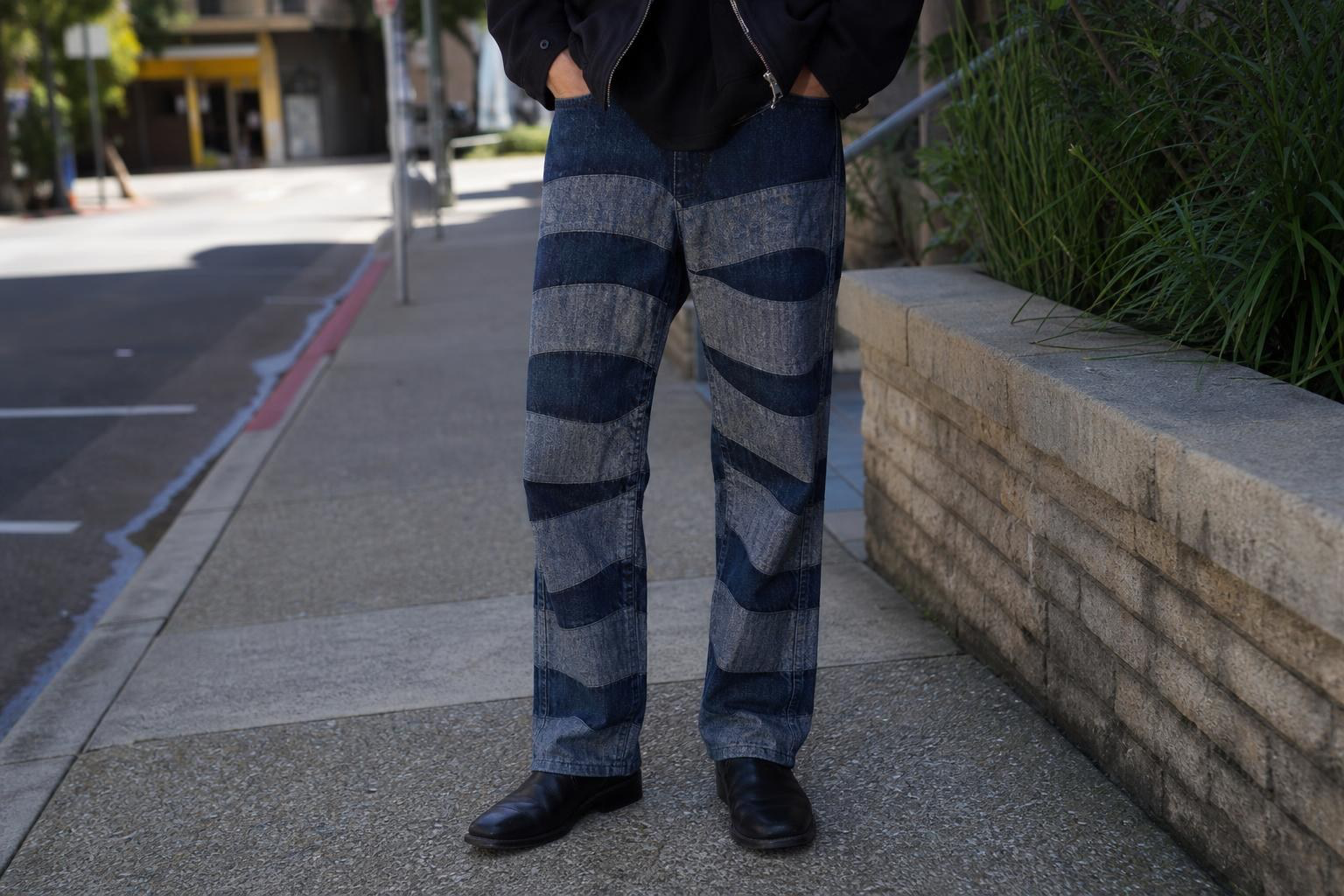
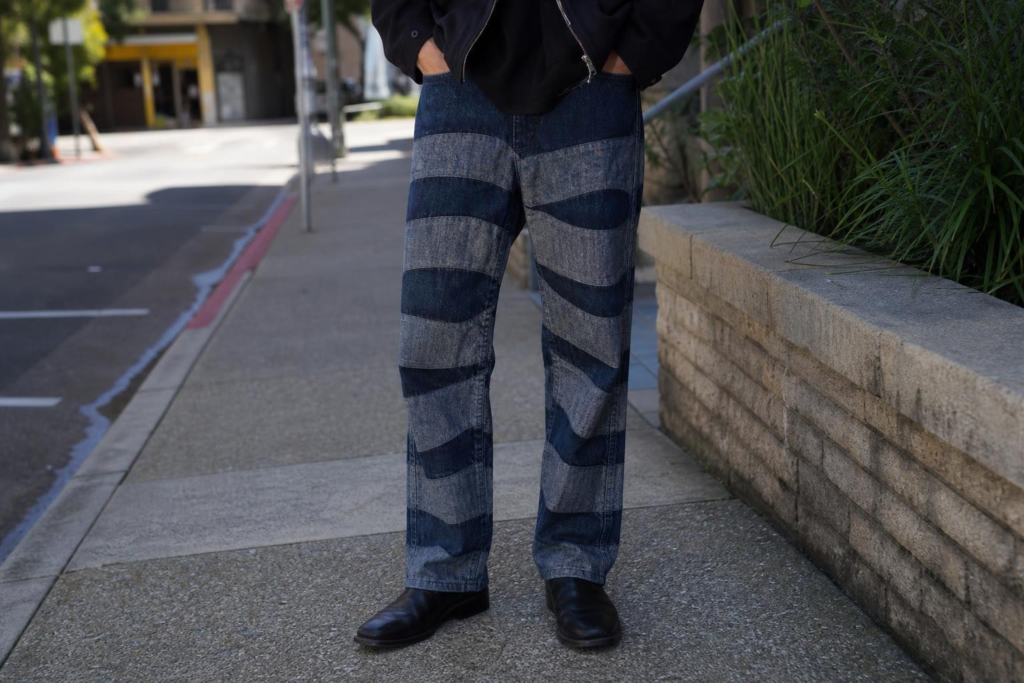
Few pieces of archival Japanese streetwear generate the kind of obsessive collector energy that surrounds the Hysteric Glamour snake loop print denim pants, known in Japanese collector circles as ウミヘビデニム (sea snake denim). These aren’t just another pair of printed jeans from the 1990s. They represent a specific intersection of punk attitude, psychedelic graphic design, and premium Japanese denim construction that Nobuhiko Kitamura built his brand around. Whether you’ve spotted a pair on Yahoo Japan Auctions and you’re trying to figure out if they’re legit, or you’re curious what a fair price looks like in 2026, this guide covers the details that actually matter: era identification, authentication markers, and current market values. Think of this as the reference you keep bookmarked for when a pair finally surfaces in your size.
How to Identify the Era & Features
Understanding which production era your pair comes from is the single most important step in evaluating Hysteric Glamour snake loop print denim. The brand has revisited snake and reptile motifs across multiple decades, and not all versions carry the same collector value or construction quality. Knowing the differences between a mid-1990s original and a 2000s reissue can mean the difference between a $300 purchase and a $1,500 one.
1990s Originals (1994-1999): The Holy Grail Era
The earliest snake loop print denim pants appeared during Hysteric Glamour’s golden period in the mid-1990s, when the brand was producing some of its most ambitious allover print pieces. These original ウミヘビデニム pairs feature a dense, repeating pattern of intertwined serpents printed directly onto raw or lightly washed Japanese selvedge denim. The print coverage is typically more saturated than later versions, with thicker ink application that gives the snakes a slightly raised texture you can feel with your fingernail.
Key identifiers for 1990s originals include the “Made in Japan” tag with the older Hysteric Glamour font, which uses a slightly more condensed typeface than post-2000 labels. The interior care tags from this era are printed on a soft white satin material, and they typically include Japanese-only washing instructions. Hardware is another giveaway: original 1990s pairs use unbranded YKK zippers with a matte finish, and the rivets are copper-toned with no logo stamping. Check the selvedge edge if the inseam is visible: authentic mid-90s pairs were constructed on vintage shuttle looms using 13-14oz denim from mills in Okayama or Hiroshima.
The fit profile on 1990s originals runs noticeably different from later versions. Most pairs were cut in a relaxed straight leg with a mid-rise waist, reflecting the silhouette preferences of the era. Waist sizing tends to run about one size smaller than the tagged size by modern Western standards, so a tagged 32 often measures closer to 30.5-31 inches at the waist.
Early 2000s Reissues (2001-2006)
Hysteric Glamour revisited the snake loop motif during the early 2000s, producing updated versions that are sometimes confused with originals. These reissues are still desirable collector pieces, but they differ in several important ways. The denim weight dropped slightly to 12-13oz on most pairs, and the print application shifted to a screen-printing method that produces a flatter, more uniform appearance compared to the slightly irregular coverage on 1990s originals.
Labels from this era switched to a bilingual format with both Japanese and English care instructions. The Hysteric Glamour logo font on the main tag became slightly bolder, and some pairs introduced a small woven “HG” tab on the back pocket, a detail absent from the original run. The fit also evolved: early 2000s versions offered both the classic straight leg and a slimmer bootcut option that reflected the denim trends of that period.
One reliable way to distinguish these from originals is the button hardware. Post-2000 pairs typically feature branded buttons with “HYSTERIC GLAMOUR” stamped around the circumference, whereas 1990s pairs used plain or minimally marked buttons.
2010s and Later Reproductions
From roughly 2012 onward, Hysteric Glamour has periodically released pieces referencing the snake loop print, but these are generally considered contemporary reproductions rather than true vintage. The denim is lighter weight (often 10-11oz stretch blends), the prints are digitally applied, and the construction uses modern chain stitching machines that produce a visibly different stitch pattern from the vintage originals. These pairs retail for $250-$400 new and don’t carry significant resale premiums. They’re fine if you want the aesthetic without the collector price tag, but they shouldn’t be confused with or priced as vintage pieces.
Authentication Checklist
For anyone evaluating a pair, here are the specific details to verify:
- Label material and font: Satin labels with condensed font indicate 1990s; woven labels with bold font suggest 2000s
- Print texture: Run your finger across the print; originals have a slightly raised, almost rubbery feel
- Hardware: Unbranded matte YKK zippers and plain copper rivets point to 1990s production
- Denim weight: Heavier fabric (13-14oz) is consistent with original runs
- Selvedge presence: Check the inseam for a visible selvedge edge on pre-2000 pairs
- Stitching: Original pairs use a tighter chain stitch with approximately 8-9 stitches per inch on the inseam
- Country of origin: All authentic vintage pairs should read “Made in Japan”; any other origin is a red flag
Market Value & Price Guide for Hysteric Glamour Vintage Snake Loop Print Denim Pants (ウミヘビデニム)
The market for vintage ウミヘビデニム has shifted considerably over the past three years. What was once a relatively niche collector item, traded mostly among Japanese archive fashion enthusiasts, has broken into broader international awareness thanks to social media exposure and the continued surge in 1990s Japanese streetwear prices. Pricing in 2026 reflects this expanded demand, though values vary dramatically based on era, condition, and where you’re buying.
Current Price Ranges by Era and Condition
Original 1990s pairs in good wearable condition (no major fading of the print, intact hardware, no repairs) typically sell between $800 and $1,800 depending on size. Sizes in the 28-32 waist range command the highest prices because they fit the broadest range of buyers. Larger sizes (34+) and very small sizes (26-27) tend to sell for 20-30% less simply due to reduced demand. Deadstock or unworn 1990s pairs are exceptionally rare and have sold for $2,200-$3,000 in documented transactions on Yahoo Japan Auctions during 2025 and early 2026.
Early 2000s reissues trade in the $400-$900 range for clean pairs. The gap between these and originals has actually widened over the past two years, as collectors have become more educated about distinguishing between the two eras. A 2000s pair in excellent condition might fetch $700, while a comparable 1990s original in the same size and condition could sell for double that.
Platform Differences
Where you buy matters enormously. Yahoo Japan Auctions (ヤフオク) remains the primary source for authentic pairs, and prices there tend to be 15-25% lower than what the same item would fetch on Western platforms like Grailed or eBay. The trade-off is that Yahoo Japan requires a proxy service for international buyers, which adds $30-$60 in fees plus international shipping costs. Still, even after proxy fees, buying through Yahoo Japan usually works out cheaper.
Grailed prices for the snake loop print denim tend to be higher because sellers factor in the convenience for English-speaking buyers and the platform’s built-in authentication reputation. Expect to pay $1,000-$2,000 for a verified 1990s pair on Grailed. Some sellers on Instagram and through private archive dealer networks price even higher, though these transactions sometimes include authentication guarantees that justify the premium.
Japanese vintage shops in Harajuku, Shimokitazawa, and Osaka’s Amerikamura district occasionally stock these, typically priced between Yahoo Japan and Grailed levels. If you’re visiting Japan, physically inspecting the print quality and denim condition before buying is worth the trip alone.
Condition Factors That Affect Value
Print integrity is the single biggest value driver. A pair with heavy print cracking or significant fading from washing can lose 40-50% of its value compared to a pair with clean, intact graphics. Small areas of natural wear at the knees or seat are expected and don’t dramatically impact pricing, but large sections of missing print are deal-breakers for most serious collectors.
Repairs and alterations also matter. Hemming reduces value by roughly 10-15% unless it was done with proper chain stitching. Any patches, darning, or structural repairs beyond minor crotch reinforcement can cut value by 25% or more. Original unhemmed inseams are preferred, and some collectors specifically seek pairs with intact selvedge chain-stitch hems as proof the jeans haven’t been altered.
Finding and Collecting ウミヘビデニム in 2026
The reality of collecting these pants right now is that patience matters more than budget. Pairs surface irregularly, sometimes with several appearing in the same month and then nothing for weeks. Setting up saved searches on Yahoo Japan Auctions using both “ヒステリックグラマー ウミヘビ” and “Hysteric Glamour snake denim” catches most listings. On Grailed, following specific sellers who specialize in Japanese archive pieces gives you an early alert advantage.
If you’re new to vintage Hysteric Glamour, the snake loop print denim is honestly not the best entry point due to the price and authentication complexity. Starting with more common pieces like the standard logo tees or single-graphic denim helps you develop an eye for the brand’s construction details before committing four figures to a single pair.
For those ready to buy, the best advice is simple: don’t rush a purchase because you’re afraid of missing out. Another pair will surface. Spend the time to verify every authentication detail outlined above, compare the asking price against recent sold listings, and factor in total cost including shipping and any import duties. A well-bought pair of original 1990s Hysteric Glamour snake loop print denim is one of the most distinctive pieces you can own in the Japanese archive space, and prices have only moved in one direction over the past five years.
コメント