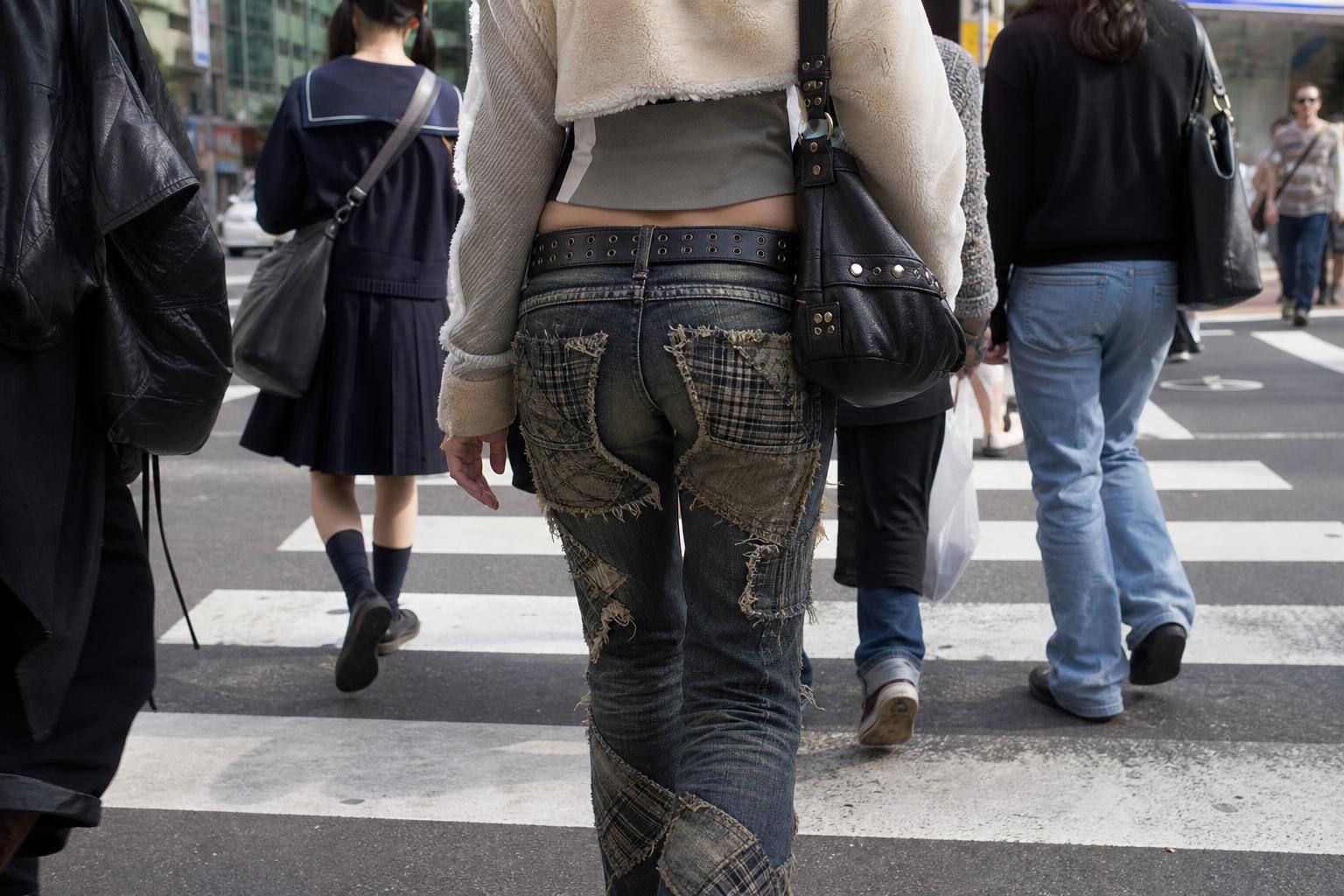
Few brands have managed to blur the line between fashion and subculture as effectively as Hysteric Glamour. Since its founding in the mid-1980s, the Japanese label has built a reputation on provocation, irreverence, and an obsessive love for rock and roll iconography. Among its most sought-after creations, the Kinky jeans line stands as a defining artifact of the brand’s identity, one that collectors and fashion enthusiasts still hunt for decades after the original runs. The vintage Hysteric Glamour kinky jeans archive represents more than just old denim: it captures a moment when Japanese street fashion was rewriting the rules of what clothing could say about its wearer. These jeans weren’t designed to blend in. They were built to start conversations, turn heads, and occasionally offend. Understanding their history means tracing the arc of a label that never cared much for playing it safe, and a subculture that rewarded that defiance with fierce, lasting loyalty. ## Origins of Hysteric Glamour and the 1980s Ura-Harajuku Scene Hysteric Glamour emerged from the back streets of Harajuku during a period when Tokyo’s fashion underground was exploding with creative energy. The Ura-Harajuku scene, literally “behind Harajuku,” was a network of small shops and independent labels operating in the narrow alleys behind the main commercial drag. This was the incubator for brands like A Bathing Ape, Undercover, and Hysteric Glamour, all of which shared a DIY ethos and a deep suspicion of mainstream fashion. The energy was raw, the production runs were small, and the customer base was intensely dedicated. ### Nobuhiko Kitamura’s Vision: Pop Art and Punk Rock Nobuhiko Kitamura founded Hysteric Glamour in 1984 with a clear set of obsessions: Andy Warhol’s pop art, the Ramones, the Rolling Stones, and the visual language of 1960s and 70s counterculture. Kitamura wasn’t interested in creating a clean, minimalist Japanese label. He wanted to build something loud. His early collections drew heavily from American and British punk, mixing screen-printed graphics with vintage silhouettes and a distinctly Japanese attention to construction quality. The result was clothing that looked like it came from a thrift store in the Bowery but felt like it was made in a Tokyo atelier. That tension between roughness and precision became the brand’s signature, and it set the stage for everything the Kinky line would later represent. ### Defining the ‘Kinky’ Aesthetic: Beyond the Name The word “kinky” in the context of Hysteric Glamour wasn’t purely about sexual provocation, though provocation was certainly part of the equation. Kitamura used the term to signal a broader sense of deviance: a rejection of polite fashion norms, a willingness to be weird, uncomfortable, and confrontational. The Kinky tag appeared on jeans that featured explicit pin-up imagery, distorted graphics, and unconventional washes. It was a declaration of intent. These weren’t jeans for the office or the department store. They were jeans for people who identified with the margins, and the name itself acted as a filter, attracting the right audience and repelling everyone else. ## Design Hallmarks of the Kinky Jeans Line What made the Kinky jeans distinct wasn’t any single element but the combination of graphic ambition, material quality, and deliberate imperfection. Each pair told a story through its details, and no two seasonal releases looked exactly alike. ### Signature Graphics: From Pin-up Girls to Warholian Prints The most immediately recognizable feature of the Kinky jeans was the graphic work. Kitamura’s team screen-printed, embroidered, and appliquéd imagery directly onto the denim, turning each pair into a wearable canvas. Pin-up girls were a recurring motif, often rendered in a style that referenced both 1950s Americana and underground comix artists like Robert Crumb. Some pieces featured Warhol-inspired repetitions of faces or logos, while others incorporated psychedelic patterns or explicit imagery that pushed the boundaries of what you could wear in public. The graphics weren’t afterthoughts or simple branding exercises. They were the point of the garment. ### Construction and Fit: The Japanese Denim Influence Beneath the provocative surface, the Kinky jeans benefited from Japan’s world-class denim manufacturing tradition. Many pieces used selvedge denim sourced from mills in Okayama and Hiroshima, the same region that supplies brands like Momotaro and Pure Blue Japan. The fits varied across seasons but generally leaned toward a slim straight or slightly tapered leg, reflecting the preferences of the Harajuku crowd. Hardware was carefully selected: branded rivets, custom zip pulls, and signature back-pocket stitching all reinforced the sense that these were premium garments wearing a punk costume. This duality is precisely what makes the vintage archive so compelling to collectors today. ### Distressing Techniques and Patchwork Artistry Hysteric Glamour’s approach to distressing predated the mass-market trend of pre-worn denim by years. The Kinky line featured hand-done abrasion, strategic ripping, and patchwork repairs that were built into the garment from the start. Some pairs incorporated mismatched denim panels, creating a Frankenstein aesthetic that looked like the jeans had lived several lives before reaching the customer. Others used bleach splatter, paint stains, or overdyeing to create one-of-a-kind colorways. These techniques weren’t random. They referenced the punk tradition of customizing and destroying clothing as an act of personal expression, and they gave each pair a sense of history that factory-fresh denim simply couldn’t replicate. ## The Cultural Impact and Global Expansion The Kinky jeans didn’t stay confined to Tokyo’s back alleys for long. By the early 1990s, Hysteric Glamour was gaining attention from musicians, stylists, and fashion insiders on both sides of the Pacific. ### Adoption by the 90s Grunge and Riot Grrrl Movements The timing of the Kinky line’s peak production coincided almost perfectly with the rise of grunge and riot grrrl in the West. Bands like Hole, Bikini Kill, and L7 embraced an aesthetic that overlapped heavily with Kitamura’s vision: thrift-store glamour, confrontational femininity, and a refusal to dress for the male gaze while simultaneously reclaiming provocative imagery. Hysteric Glamour pieces, including Kinky jeans, began appearing on musicians and scenesters in Seattle, Olympia, and New York. The brand didn’t need a formal marketing campaign. Its audience found it organically, drawn by the same cultural references that had inspired Kitamura in the first place. This cross-pollination between Japanese street fashion and Western underground music gave the Kinky line a credibility that no advertising budget could buy. ### Celebrity Endorsements and the London Boutique Era By the late 1990s, Hysteric Glamour had opened a boutique in London, placing the brand directly in the orbit of Britpop and the UK’s fashion press. Figures like Kate Moss and members of Oasis were spotted wearing the label, and the London shop became a destination for collectors and celebrities alike. The Kinky jeans, with their unmistakable graphics and premium construction, were among the most popular items. This period also saw the brand expand its distribution to select boutiques in New York and Los Angeles, though Kitamura always kept production limited. That scarcity, combined with growing international demand, laid the groundwork for the collector market that would explode two decades later. ## The Modern Resurgence in the Archival Fashion Market The past five years have seen archival Japanese fashion become one of the hottest segments of the resale market, and Hysteric Glamour sits near the top of the hierarchy. ### The Role of Social Media and Grailed Culture Platforms like Grailed, Instagram, and TikTok have transformed how people discover and purchase vintage clothing. A single viral post featuring a rare pair of Kinky jeans can send prices surging overnight. The vintage Hysteric Glamour kinky jeans archive has become a category unto itself on resale platforms, with dedicated sellers specializing in authenticated pieces from specific seasons. Prices for rare Kinky jeans regularly exceed $500, and exceptional pieces with intact graphics and original tags can command well over $1,000. The algorithm-driven nature of social media means that younger buyers who weren’t alive during the brand’s 1990s peak are now among its most passionate collectors, discovering the label through curated feeds and archive accounts rather than through record shops or punk shows. ### Identifying Authentic Vintage Kinky Tags and Labels With rising prices comes rising incentive to counterfeit, and the market for fake Hysteric Glamour has grown alongside legitimate demand. Authentic vintage Kinky pieces can be identified through several key details. The interior tags evolved across production eras: early pieces feature a simple black-on-white woven label with the Hysteric Glamour logo, while later runs introduced color-coded season tags and care labels with specific font treatments. The “Kinky” sub-label typically appears as a separate tag sewn below the main brand label. Stitching quality is another reliable indicator, as genuine pieces show the tight, even construction typical of Japanese manufacturing. Buyers should also examine graphic printing closely: authentic screen prints have a slightly raised texture and consistent color saturation, while reproductions often appear flat or slightly blurred. When shopping the archive, purchasing from established sellers with verifiable track records remains the safest approach. ## Legacy of the Kinky Tag in Contemporary Design The influence of Hysteric Glamour’s Kinky line extends far beyond the resale market. Contemporary brands like Kapital, Neighborhood, and even mainstream labels like Diesel have drawn from the same well of graphic-heavy, punk-inflected denim that Kitamura pioneered. The idea that jeans can function as a canvas for art and attitude, rather than just a utilitarian garment, owes a significant debt to what Hysteric Glamour established in those cramped Ura-Harajuku shops. Kitamura’s brand continues to release new collections in 2026, but the vintage pieces carry a weight that new production simply can’t match. They represent a specific moment in fashion history when Japanese designers were fearlessly remixing Western subcultures and creating something entirely new in the process. The Kinky jeans archive isn’t just a collection of old denim. It’s a record of creative risk-taking, of a designer who bet everything on the idea that fashion should be dangerous, funny, and a little bit offensive. For collectors and enthusiasts willing to hunt for the real thing, these pieces remain some of the most rewarding finds in the entire world of vintage fashion.
The History of Vintage Hysteric Glamour Kinky Jeans
 PANTS
PANTS

コメント