

Introduction
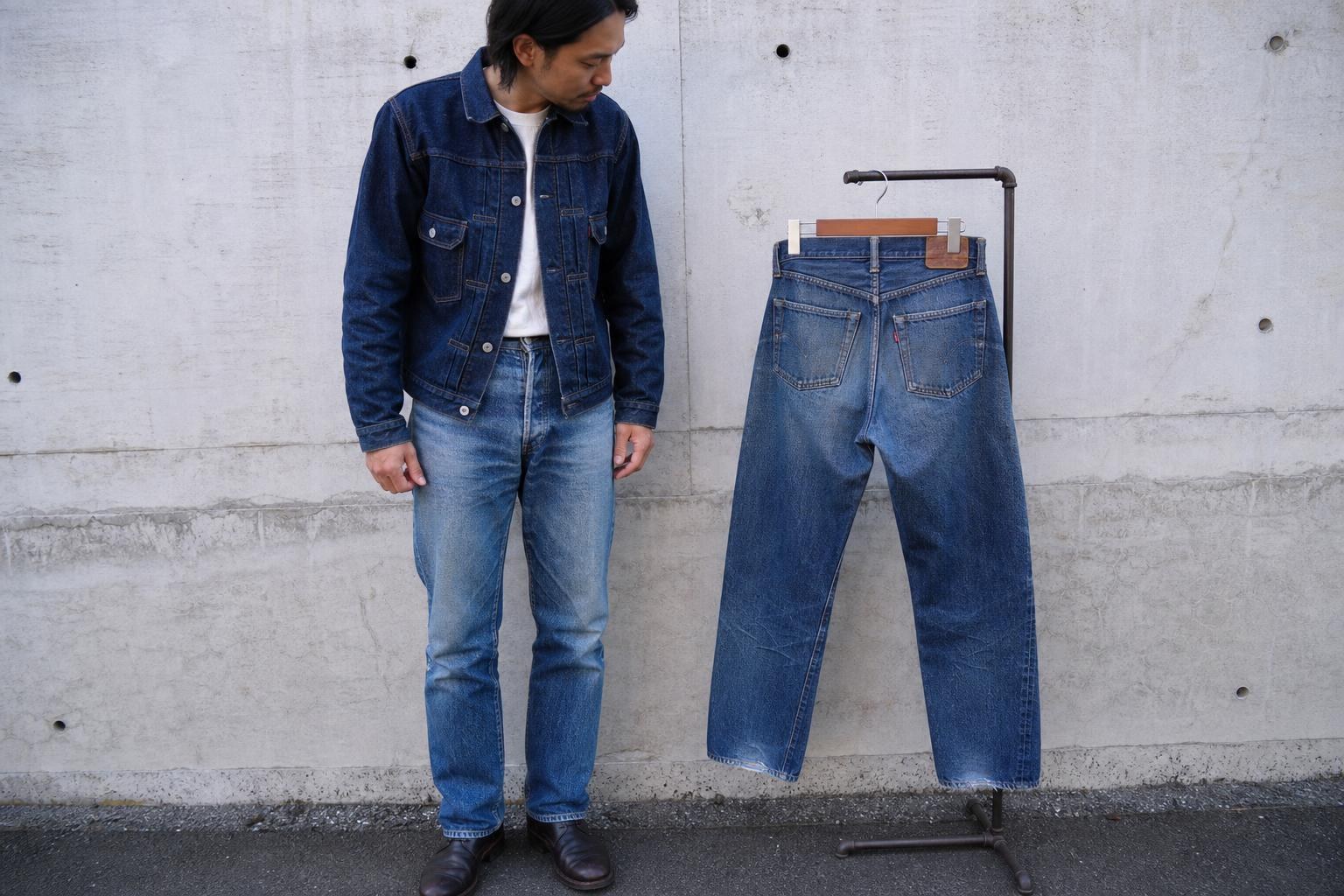
A pair of faded, worn-in 501s from the 1960s can sell for more than a brand-new designer suit. That’s not hyperbole: it’s a reality that’s been playing out on auction sites and vintage marketplaces for years, and prices have only climbed higher through 2025 and into 2026. The vintage Levi’s 501 Big E single stitch denim jean sits at the top of the denim collecting hierarchy, a garment that represents the intersection of American workwear history, counterculture style, and genuine scarcity. Whether you’re a seasoned collector hunting for a specific redline selvedge pair or someone who just inherited a box of old jeans from a grandparent’s attic, understanding what makes these pieces special is essential before buying, selling, or even washing them. This guide breaks down the eras, the authentication details, and the current market values so you can make informed decisions with real confidence. The difference between a $200 pair and a $20,000 pair often comes down to details most people overlook entirely.
How to Identify the Era & Features
The term “Big E” refers to the red tab on the back right pocket of Levi’s jeans, where the word LEVI’S was spelled in all capital letters. Levi’s switched from the uppercase “Big E” to a lowercase “e” (commonly called “small e”) around 1971, making the Big E designation a reliable marker that the jeans were produced before that transition. But simply having a Big E tab doesn’t tell you everything. The specific era within the Big E production window dramatically affects both historical significance and value.
Pre-1960s: The Holy Grail Pairs
Levi’s 501s from the 1940s and 1950s are the rarest and most valuable. These pairs feature a leather patch on the waistband rather than the paper or cardboard patches that came later. The back pocket rivets were still exposed (Levi’s switched to hidden rivets in 1937 on some models, but exposed rivets persisted on certain production runs into the early 1950s). Cinch backs, suspender buttons, and single-sided selvedge are all hallmarks of this era. If you find a pair with a leather patch, arcuate stitching on both back pockets, and visible selvedge on the outseam, you’re likely holding a pair worth thousands.
1960s: The Sweet Spot for Collectors
The 1960s Big E 501s are what most collectors actively hunt. These jeans feature the iconic red tab with capital letters, a paper patch (replacing the leather), and the transition from hidden to exposed selvedge on the outseam. The single stitch construction is a critical identifier here: Levi’s used a single needle to stitch the outseam, creating a clean, uniform line of stitching. This was replaced by a double-needle chain stitch in the early 1970s, making single stitch construction a reliable dating tool. The denim itself was typically 14-ounce selvedge, woven on narrow shuttle looms, producing fabric with a tighter, more irregular texture than modern cone-spun denim.
The Single Stitch Detail
Single stitch refers to the construction method on the leg outseam. When you turn a pair of vintage 501s inside out, you’ll see a single row of stitching along the outseam rather than the parallel double rows found on later production. This single needle technique was slower and more labor-intensive, which is precisely why Levi’s eventually moved away from it. For authentication purposes, single stitch construction combined with a Big E tab places the jeans firmly in the pre-1971 window. Look carefully at the selvedge ID: the self-finished edge of the denim visible along the outseam. On authentic pairs, the selvedge line should show a colored thread (usually red, hence “redline selvedge”) woven into the edge of the fabric.
Authentication Checklist
Spotting fakes and reproductions requires attention to several specific details:
- The red tab should be sewn into the right back pocket seam with the text reading correctly from the outside. Reproductions often have slightly different font spacing or thread color.
- Back pocket arcuate stitching should be done with a single continuous thread, not two separate lines. The pattern should be a gentle, symmetrical arc.
- Buttons should be stamped with specific factory codes. A “2” indicates the Valencian Street factory in San Francisco, while “6” marks the production from the Amarillo, Texas plant.
- The paper patch should show a two-horse design with specific text formatting. Font inconsistencies are one of the fastest ways to identify reproductions.
- Chain stitching on the hem (as opposed to a lock stitch) is typical of original production. The chain stitch creates a characteristic roping effect on the hem after washing.
- Fabric weight and texture matter. Original selvedge denim has a slubby, uneven character that modern reproductions from brands like LVC (Levi’s Vintage Clothing) attempt to replicate but rarely match exactly.
Market Value & Price Guide for Levi’s Vintage 501 Big E Single Stitch Denim Jeans
Pricing vintage 501 Big E single stitch denim jeans is part science, part art. Condition, size, color, and provenance all play significant roles, and the market has shifted considerably over the past few years. As of early 2026, the market for top-tier vintage denim remains strong, driven by collectors in Japan, the United States, and increasingly across Southeast Asia and Europe.
Price Ranges by Era and Condition
A deadstock (unworn, with original tags) pair of 1960s Big E 501s in a common size like W32 or W34 can command $3,000 to $8,000 depending on the specific year and factory of origin. Worn pairs in good condition with strong indigo remaining typically sell between $800 and $3,000. Heavily faded or damaged pairs still hold value, often ranging from $300 to $1,000, particularly if the fading pattern is desirable (collectors prize natural, even fades over stained or blotchy wear patterns).
Pre-1960s pairs exist in a different price universe entirely. A 1950s pair with a leather patch in wearable condition can sell for $10,000 to $25,000, and exceptional examples have crossed the $50,000 mark at auction. The famous “Levi’s from a mine shaft” pairs, discovered in abandoned mines in the American West, have sold for six figures due to their extreme rarity and the romantic narrative attached to them.
Where to Buy and Sell
The platform you choose significantly affects both the prices you’ll pay and the audience you’ll reach. Yahoo Japan Auctions (ヤフオク) remains one of the strongest marketplaces for vintage denim, as Japanese collectors have been the backbone of the vintage Levi’s market since the 1980s. Prices on Yahoo Japan tend to be higher for premium pieces because the buyer pool is deeply knowledgeable and willing to pay for authenticated, well-documented pairs.
Grailed and eBay serve the Western market well, though eBay’s broader audience means you’ll encounter more casual sellers and occasionally better deals. Grailed skews younger and more fashion-oriented, which can work in your favor if you’re selling a pair with strong aesthetic appeal. Specialized vintage denim dealers, both online shops and brick-and-mortar stores in cities like Tokyo (particularly in the Harajuku and Shimokitazawa neighborhoods), Los Angeles, and London, offer curated selections with authentication guarantees but charge premium prices for that service.
Size Matters: Literally
One factor that surprises newer collectors is how dramatically size affects value. Common sizes like W30 to W34 command the highest prices because they fit the most buyers. Extremely small or large sizes, while rarer in absolute production numbers, often sell for less because the buyer pool shrinks. A W28 pair might be objectively harder to find than a W32, but the W32 will almost always sell for more because more people can actually wear it. This is one area where scarcity doesn’t automatically equal higher value.
Condition Grading
The vintage denim community generally uses a condition scale that factors in several elements: remaining indigo depth, structural integrity of the fabric (especially at stress points like the crotch and knees), presence of repairs or alterations, and completeness (original hem length, buttons, and tabs intact). A pair that’s been professionally darned or repaired by a skilled artisan can actually retain strong value, sometimes even adding character that collectors appreciate. Amateur repairs with mismatched thread or iron-on patches, on the other hand, tend to decrease value.
Building Your Collection with Confidence
The world of vintage Levi’s 501 Big E denim rewards patience and knowledge in equal measure. Start by handling as many pairs as possible, whether at vintage fairs, specialty shops, or through collector meetups. No amount of reading replaces the tactile experience of feeling authentic 1960s selvedge denim between your fingers or examining the specific way a genuine red tab sits in the pocket seam.
If you’re buying your first pair, focus on the 1960s era: these are available enough to find without years of searching, valuable enough to hold their worth, and wearable enough to actually enjoy. Avoid the temptation to chase the cheapest listing you can find online. A well-documented pair from a reputable seller at $1,200 is almost always a better investment than a suspiciously cheap listing at $400 with blurry photos and vague descriptions. Ask for detailed images of the tab, the selvedge, the buttons, the patch, and the interior stitching before committing.
The vintage 501 Big E single stitch jean isn’t just a collectible: it’s a piece of American manufacturing history that happens to look incredible with a white t-shirt and boots. Whether you’re in it for the investment potential or simply because nothing else fits quite the same way, knowing what you’re looking at is the single most valuable skill you can develop.

コメント