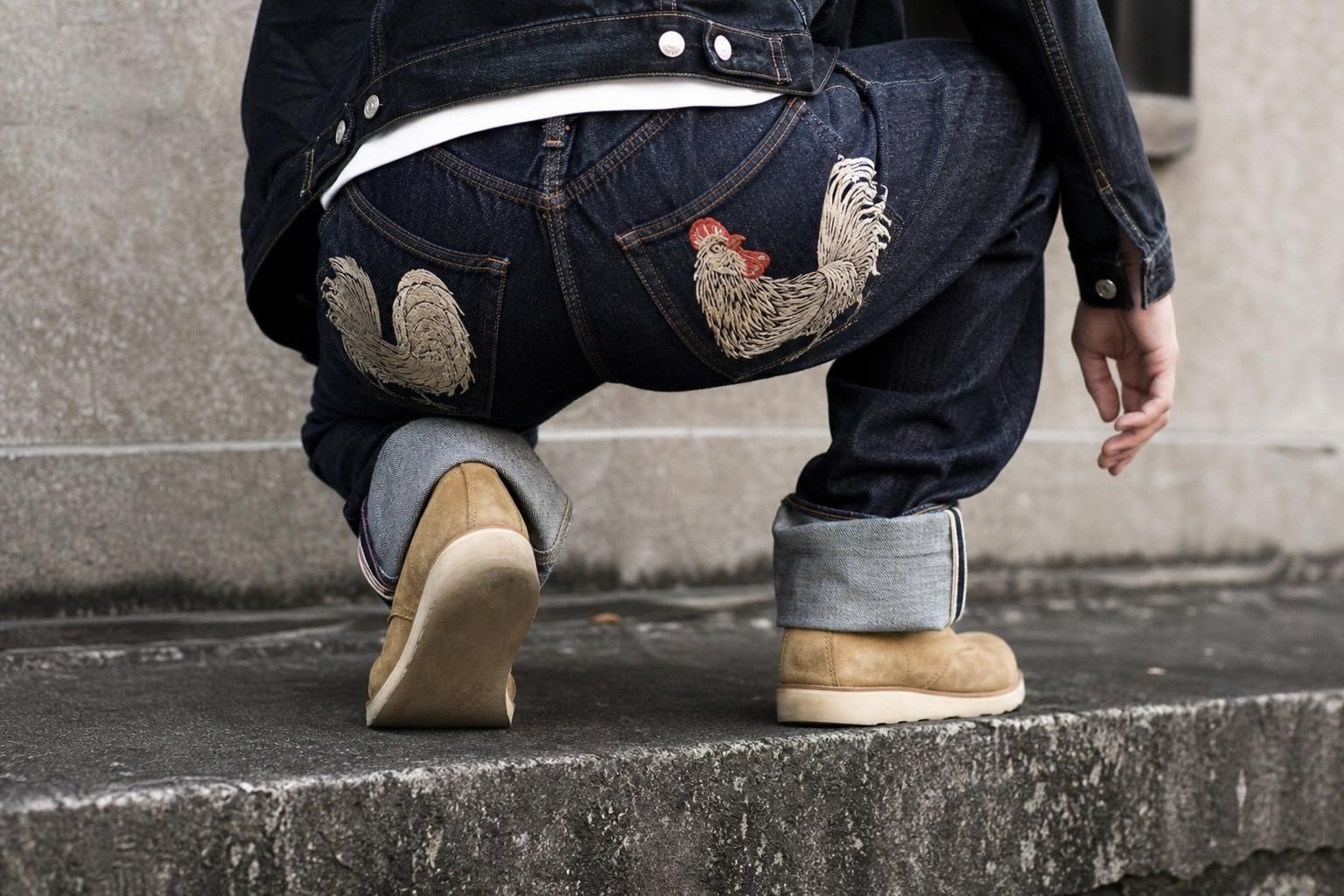
Few denim pieces carry the same weight as a pair of vintage Evisu jeans featuring the brand’s iconic daicock embroidery. Born from Japan’s obsession with premium selvedge craftsmanship and hand-finished detailing, these jeans became one of the most recognizable garments in streetwear history. Whether you stumbled across a pair at a thrift store or you’ve been hunting for a specific lot number for years, understanding what makes these jeans special – and what separates real pairs from fakes – is essential knowledge. The market for Evisu’s embroidered denim has only grown hotter, with certain pairs fetching well over $1,000 on resale platforms in 2026. This guide covers everything from authentication and fit to care and collecting, so you can buy, wear, and preserve these pieces with confidence. ## The Legacy of the Evisu Daicock ### Origins of the Seagull and Daicock Motifs Hidehiko Yamane founded Evisu in Osaka in 1991, naming the brand after Ebisu, the Japanese god of prosperity. Early production was limited to roughly 14 pairs per day, each crafted on vintage shuttle looms and hand-painted with the now-famous seagull logo on the back pockets. The daicock motif – a large, bold embroidered or painted design spanning the entire back pocket area and sometimes extending across the leg – came slightly later as the brand expanded its visual identity. The word “daicock” itself references a traditional Japanese figure associated with wealth, and the oversized embroidery became Evisu’s most distinctive signature. While the seagull logo remained consistent, daicock designs varied wildly between seasons, incorporating koi fish, dragons, kanji characters, and abstract patterns. ### Cultural Impact in 90s and 2000s Streetwear By the late 1990s, Evisu had crossed over from Japanese denim circles into global hip-hop and streetwear culture. Artists like Jay-Z, Missy Elliott, and the Notorious B.I.G. wore pairs on album covers and in music videos, turning the brand into a status symbol. The oversized daicock embroidery was impossible to miss – it was loud, expensive, and unmistakably Japanese. In London, Evisu’s Savile Row pop-up brought the brand to a European audience that was already obsessed with Japanese selvedge. That cultural moment, roughly 1998 to 2006, is what collectors chase today. Jeans from this era represent the peak of Evisu’s creative ambition and hand-finished quality before licensing deals diluted the brand’s output. ## Identifying Authentic Vintage Daicock Jeans ### Evaluating Selvedge Denim Quality and Weights Genuine vintage Evisu pairs were woven on old Toyoda shuttle looms, producing selvedge denim with a characteristic tight weave and visible self-edge along the outseam. Most pairs from the late 1990s and early 2000s used 14 to 16 oz denim, though some heavyweight releases pushed past 18 oz. When you turn the cuff, you should see a clean selvedge line – typically with a red or white ID stripe. The denim itself should feel dense and slightly slubby, with natural texture variations that mass-produced fabric simply cannot replicate. If the denim feels thin, overly uniform, or plasticky, you’re likely looking at a later licensed version or an outright fake. ### Embroidery Precision and Stitching Patterns The embroidery on authentic vintage pairs has a specific character that’s hard to counterfeit convincingly. Original daicock stitching sits slightly raised from the denim surface, with tight, consistent thread tension throughout the design. Colors are rich and saturated, often using metallic gold, deep red, or bright white thread. One reliable tell: examine the reverse side of the embroidery. On genuine pairs, the backside stitching is neat and organized, not a chaotic mess of loose threads. Counterfeits from the mid-2000s onward tend to use thinner thread, show uneven spacing, and sometimes feature designs that never actually appeared in Evisu’s production catalog. ### Deciphering Internal Tags and Leather Patches Internal tags are your best friend during authentication. Genuine vintage Evisu jeans feature a series of tags inside the waistband: a main brand tag (often with Japanese text), a care label, and frequently a lot number tag. The lot number is critical – numbers like No. 1, No. 2, and No. 2001 correspond to specific cuts and production eras. The leather back patch should be made from real hide, not bonded leather or synthetic material. On pre-2005 pairs, the patch typically features a painted or stamped seagull with clean edges. Watch for font inconsistencies, misspellings, and tag materials that feel cheap. Cross-referencing lot numbers with known Evisu catalogs is one of the most reliable authentication methods available. ## Key Variations and Collectors’ Grails ### Multi-Pocket vs. Oversized Daicock Designs Evisu produced several distinct styles within the daicock family. The multi-pocket cargo variants, which added utility pockets along the thigh and calf, remain popular with collectors who value the Y2K aesthetic. These pairs often featured smaller, more contained embroidery to accommodate the extra pocket hardware. On the other end of the spectrum, the oversized daicock designs – where embroidery covered the entire back panel from waistband to knee – are the true statement pieces. These command the highest prices because they’re the most visually dramatic and the hardest to find in good condition. Embroidery that large is also more prone to thread damage over two decades of wear, making well-preserved examples genuinely rare. ### Rare Colorways and Limited Edition Collaborations Beyond the standard indigo and white combinations, Evisu released pairs in black, ecru, and even green selvedge denim. Black daicock embroidered jeans on black denim are particularly sought after, as the tonal contrast becomes more pronounced with wear and fading. Limited collaborations with brands like Puma and certain Japanese retailers produced small-run pairs that rarely surface on the secondary market. Seasonal releases with unique embroidery themes – cherry blossoms for spring, for instance – also carry premiums. If you find a pair with an embroidery pattern you can’t identify in any catalog, that’s either a very good sign (unreleased sample or ultra-limited run) or a very bad one (counterfeit). Research before you buy. ## Understanding Evisu Fits and Silhouettes ### The Iconic 2000 and 2001 Loose Cuts Evisu’s lot numbering system doubled as a fit guide. The No. 2000 and No. 2001 were the brand’s most popular loose-fit cuts, designed to sit comfortably on the hip with a wide, straight leg that pooled slightly at the ankle. This silhouette defined the era – baggy enough for the streetwear crowd but still structured thanks to the heavy selvedge denim. The No. 2001 offered a slightly tapered leg compared to the 2000, making it a bit more versatile. These two cuts account for the majority of vintage daicock pairs you’ll encounter on the resale market, and they’re the ones most people picture when they think of Evisu. ### Sizing Nuances for Raw and Sanforized Pairs Sizing vintage Evisu correctly requires knowing whether your pair is raw (unsanforized) or sanforized. Raw pairs will shrink significantly – sometimes a full size or more – after the first wash, particularly in the inseam. Sanforized pairs have been pre-shrunk and will remain closer to their tagged size. Most vintage Evisu jeans use Japanese sizing, which runs smaller than American sizing. A tagged size 34 in Evisu often measures closer to a 32 in actual waist circumference. Always ask for flat-lay measurements before purchasing online. Measure the waist, rise, thigh, knee, leg opening, and inseam, then compare against a pair you already own that fits well. Guessing based on the tag number alone is a recipe for disappointment. ## Caring for Embroidered Vintage Denim ### Washing Techniques to Preserve Thread Integrity The embroidery is the most vulnerable element on these jeans. Machine washing on a standard cycle can cause thread abrasion, color bleeding, and loosening of the stitching over time. Turn the jeans inside out, use cold water, and select the gentlest cycle your machine offers. Better yet, hand wash them in a bathtub with a small amount of denim-specific detergent or mild dish soap. Avoid wringing or twisting the embroidered areas. Some collectors skip washing entirely and use spot cleaning or freezing to manage odor, but after 20-plus years, most vintage pairs benefit from at least one careful wash to remove accumulated grime and restore the denim’s texture. ### Storage Best Practices to Avoid Fading Sunlight is the enemy. Prolonged exposure to UV light will fade both the indigo dye and the embroidery thread, and the damage is irreversible. Store your Evisu jeans folded in a cool, dark closet – not hanging, which can stretch the waistband and create stress points around the embroidery. Acid-free tissue paper between folds helps prevent crease marks from setting permanently. If you’re storing pairs long-term, cedar blocks nearby will deter moths without the chemical residue of mothballs. Avoid plastic garment bags, which trap moisture and can promote mildew. A breathable cotton dust bag or simply a clean shelf in a dry room is ideal. ## Navigating the Secondary Market Buying vintage Evisu daicock embroidered denim in 2026 means wading through a mix of legitimate sellers, uninformed flippers, and outright scammers. Platforms like Grailed, Yahoo Japan Auctions, and specialized Instagram sellers remain the best sources, but each carries risks. On Grailed, look for sellers with extensive transaction histories and detailed photos showing tags, selvedge lines, and embroidery close-ups. Yahoo Japan Auctions offers access to pairs that never left the Japanese domestic market, though you’ll need a proxy service like Buyee or Zenmarket to bid. Pricing varies enormously. Standard daicock pairs in average condition sell for $200 to $500, while rare colorways, pristine examples, or confirmed limited editions can exceed $1,500. Condition matters more than anything: thread damage, denim tears, and faded embroidery all reduce value significantly. Always request measurements and close-up photos of any wear points before committing. The best approach is patience. Set alerts on your preferred platforms, follow dedicated Evisu collector accounts on social media, and resist the urge to overpay for the first pair you find. The right pair at the right price will surface – and when it does, you’ll know exactly what to look for thanks to the authentication knowledge above. These jeans aren’t just clothing. They’re artifacts from a specific moment in fashion history, and treating them with the respect they deserve will keep them wearable and collectible for decades to come.
A Guide to Vintage Evisu Daicock Embroidered Jeans
 PANTS
PANTS
コメント