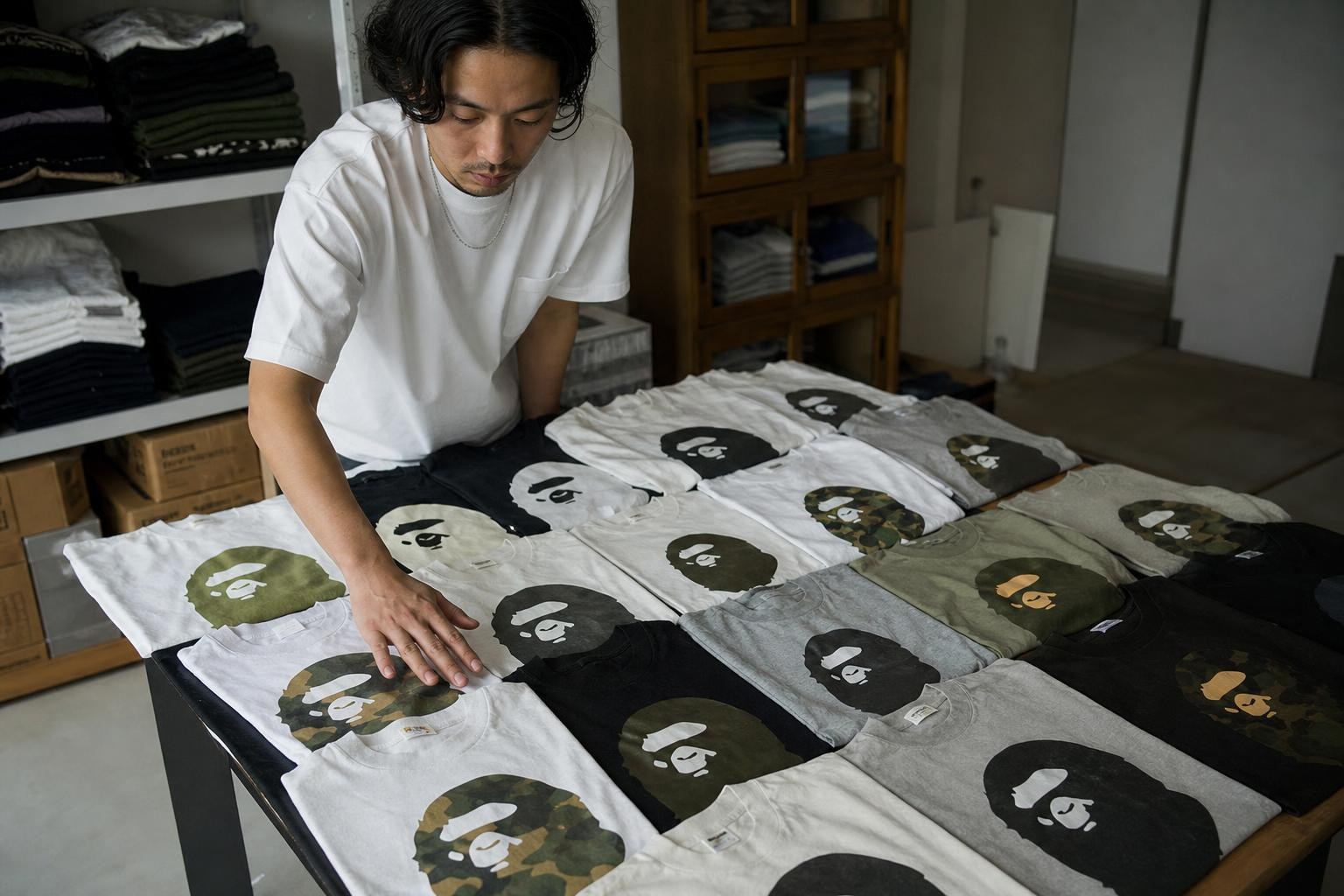
Few garments carry the weight of an entire subculture the way a faded, cracked-ink BAPE tee from the mid-1990s does. Before the brand became a global phenomenon stocked in malls and worn by pop stars, it was a Harajuku secret: tiny production runs, no advertising budget, and a founder who treated each graphic like a piece of fine art. The 90s BAPE Busy Works t-shirt archive represents something more than collector nostalgia. It’s a physical record of how Japanese street fashion challenged everything the Western industry assumed about branding, exclusivity, and cool. These shirts were never meant for mass consumption. They were made for a tight circle of Tokyo kids who understood the references, appreciated the craft, and didn’t need a celebrity co-sign to validate their taste. Thirty years later, the surviving pieces tell a story that no lookbook or Instagram repost can fully capture. They smell like old cotton and screen-printing ink, and they carry the DNA of modern streetwear in every thread. ## Origins of the Busy Works Aesthetic in 90s Harajuku ### Nigo and the Birth of Nowhere Tomoaki Nagao, known universally as Nigo, opened “Nowhere” in 1993 alongside his friend Jun Takahashi (who would go on to found Undercover). The shop sat in the backstreets of Harajuku’s Ura-Hara district, a cluster of narrow lanes where young designers operated out of spaces barely larger than a parking spot. Nigo’s obsession with American pop culture, Planet of the Apes, and vintage military gear fused into something Tokyo had never seen before. A Bathing Ape in Lukewarm Water, the brand’s full name, was a wry joke about the complacency of Japanese youth culture. Early production was absurdly limited: sometimes fewer than 50 pieces per design. That scarcity wasn’t a marketing tactic. Nigo simply couldn’t afford more. ### The Cultural Significance of the Busy Works Logo The “Busy Works” text became BAPE’s foundational graphic identity. Arranged in a circular seal format, it borrowed heavily from American collegiate and military insignia, flipping Western visual language into something distinctly Japanese. The phrase itself suggested hustle, creativity, and constant output, a fitting motto for a brand that released new graphics almost weekly during its peak 90s years. What made it iconic wasn’t just the design but the context: wearing a Busy Works tee in 1994 or 1995 meant you had physically walked into Nowhere, knew somebody who did, or had traded for one. The logo functioned as a membership badge for a community that didn’t advertise its existence. ## Defining Characteristics of Vintage BAPE Tees ### Oneita and Early Heavyweight Blanks One of the quickest ways to date a genuine 90s BAPE piece is by its blank. Before the brand manufactured its own garments, Nigo printed on existing American-made blanks, most commonly Oneita Power-T shirts. These heavyweight cotton bodies had a distinctive boxy cut, a ribbed collar that held its shape for decades, and a slightly rough hand-feel that modern fast-fashion blanks can’t replicate. Some early runs also used Hanes Beefy-T blanks, though Oneita remained the go-to through roughly 1997. The weight of these shirts typically ranged from 6.0 to 6.1 ounces, giving them a substantial drape that feels nothing like the tissue-thin tees common today. If you pick up a supposed 90s BAPE shirt and it feels flimsy, walk away. ### Screen Printing Techniques and Ink Durability Nigo’s team used traditional plastisol screen printing for most early runs. The ink sits on top of the fabric rather than soaking into it, which creates that slightly raised, rubbery texture you can feel with your fingernail. After 30 years of washing and wearing, authentic vintage prints develop a specific cracking pattern: the ink fractures along fold lines while retaining color density in untouched areas. This aging signature is nearly impossible to fake convincingly. Some later 90s pieces experimented with discharge printing, which bleaches the fabric and replaces the color, resulting in a softer hand but less vivid graphics. Knowing which technique was used on which design helps collectors pinpoint production windows with surprising accuracy. ## Iconic Graphic Variations from the Archive ### The Classic Circular Seal Design The standard Busy Works circular logo went through subtle iterations between 1993 and 1999. Early versions featured thinner typography and a tighter kerning between letters. By 1996, the proportions had shifted: the circle grew slightly larger, the font weight increased, and color options expanded beyond the original black-on-white. Some of the most sought-after variants include the red-on-navy colorway from approximately 1995 and a forest green print on a heather grey blank that surfaced briefly in 1997. Collectors who study the archive closely can identify production year based on letter spacing alone, which sounds obsessive until you realize a one-year difference can mean a $500 swing in resale value. ### Rare Collaborative and Event-Specific Prints Before collaborations became a weekly occurrence in streetwear, BAPE produced small runs for specific events, pop-up shops, and friends of the brand. A 1996 tee made for a Harajuku block party featured the Busy Works seal overprinted with a hand-drawn map of the Ura-Hara neighborhood. Fewer than 30 are believed to exist. Another notable piece is a 1998 collaboration with Futura 2000, where the artist’s signature pointillism was layered beneath the circular logo. These event-specific and collaborative prints represent the rarest tier of any BAPE archive, and they almost never surface on public resale platforms. When they do, they tend to sell through private networks before a listing goes live. ## The Evolution of Branding: Tags and Labels ### Identifying 90s Era Neck Tags Neck tags are the single most important authentication detail for vintage BAPE. From 1993 to roughly 1996, shirts printed on Oneita blanks retained the original Oneita neck tag, sometimes with a small BAPE label sewn directly below or beside it. Around 1996 to 1997, BAPE transitioned to its own branded woven tags: a white rectangle with “A Bathing Ape” in a clean serif font. The stitching on authentic tags is tight and even, with no loose threads or uneven spacing. Counterfeit tags from this era tend to use a slightly different shade of white (often more cream-toned) and a font that’s close but not quite right. Comparing a suspect tag side-by-side with a confirmed authentic example under good lighting reveals differences that photos alone can miss. ### The Introduction of the Ape Head Sleeve Tab Sometime around 1998, BAPE began adding the now-iconic Ape Head woven tab to the left sleeve of its t-shirts. This small detail, roughly one centimeter square, became a brand signature that persists to this day. On genuine late-90s pieces, the tab features a tightly woven ape face with clear definition in the eyes and nostrils. Reproductions from the 2010s and beyond often show a muddier weave with less contrast. The tab’s introduction also serves as a useful dating tool: if a shirt claims to be from 1995 but has a sleeve tab, something doesn’t add up. Cross-referencing tag style, blank type, and the presence or absence of the sleeve tab creates a three-point authentication framework that catches most fakes. ## Collecting and Authenticating 90s Busy Works ### Spotting Fakes in the Vintage Market The counterfeit market for vintage BAPE has exploded since 2020, driven by rising prices and social media hype. Fakes have become increasingly sophisticated, but certain tells remain consistent: – Print texture: authentic plastisol prints have a specific thickness and crack pattern that heat-transfer reproductions can’t match – Blank weight: genuine Oneita and early BAPE blanks feel heavier than most modern counterfeits – Tag font: the serif font on authentic 90s BAPE tags has specific proportions; counterfeits frequently get the letter “A” wrong – Collar ribbing: original blanks have a distinct rib count and tension that reproductions rarely replicate – Aging consistency: a shirt that looks 30 years old in some areas but brand-new in others is suspect Buying from established vintage dealers with verifiable sourcing histories remains the safest approach. Auction platforms with authentication services have improved, but nothing replaces handling the garment in person. ### Preserving the Legacy: Care and Storage Owning a piece from the 90s BAPE Busy Works archive comes with responsibility. These shirts are fragile artifacts at this point. Hand washing in cold water with a pH-neutral detergent protects both fabric and ink. Never wring or twist the garment; instead, press it flat between clean towels to remove excess water. Store pieces folded (not hung, which stretches the collar) in acid-free tissue paper, away from direct sunlight and humidity. Silica gel packets inside storage containers help prevent mildew in humid climates. If a print is already cracking, avoid ironing directly over the graphic. A pressing cloth between the iron and the print on low heat can smooth wrinkles without causing further damage. ## The Lasting Influence on Modern Streetwear The fingerprints of Nigo’s early work are everywhere in 2026 streetwear, even when brands don’t acknowledge the debt. The idea that a t-shirt could function as both a wearable garment and a collectible art object traces directly back to those Harajuku backstreets. Limited drops, circular logo motifs, heavyweight blanks as a quality signal, collaborative capsules with artists: all of these now-standard industry practices were pioneered or popularized by BAPE in the 1990s. Brands like Online Ceramics, Brain Dead, and even Nike’s more experimental sub-labels owe a structural debt to the template Nigo built. For collectors, the Busy Works tees from this era aren’t just expensive cotton. They’re primary source documents from the birth of a movement. Every cracked print and yellowed tag carries information about production methods, cultural networks, and aesthetic choices that shaped how an entire generation thinks about clothing. If you’re serious about understanding streetwear’s roots, studying the archive of vintage BAPE Busy Works shirts isn’t optional. It’s where the story starts.
Inside the 90s BAPE Busy Works T-Shirt Archive
 SHIRTS

コメント