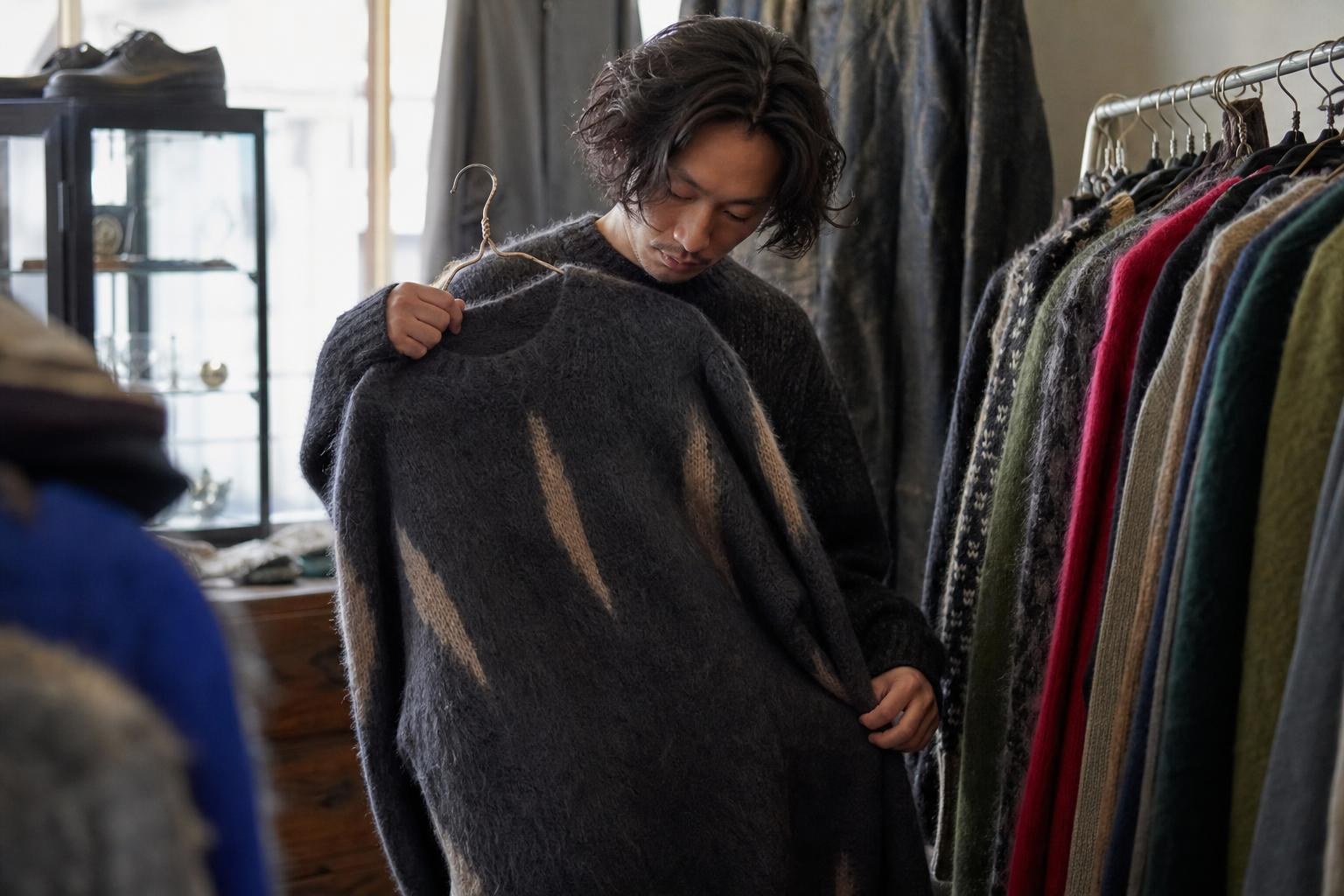
Few Japanese fashion labels carry the cult weight of Undercover, and nothing from the brand’s archive generates quite as much obsession as its mohair knitwear. A vintage Undercover mohair knit sweater represents something more than a warm layer: it’s a wearable artifact from one of fashion’s most restless creative minds. Jun Takahashi has spent over three decades channeling punk, horror, fine art, and literary references into garments that feel alive with tension. His mohair pieces, with their fuzzy halos of fiber and often aggressive graphics, sit at the intersection of luxury craft and subcultural defiance. Whether you’re a longtime collector or just starting to understand why these sweaters command four-figure resale prices, knowing what to look for, which collections matter, and how to care for these pieces will save you money and heartbreak. This is the guide I wish I’d had before I started hunting. ## The Legacy of Jun Takahashi and Undercover Mohair Jun Takahashi founded Undercover in 1990, and from the start, the label operated outside the polite conventions of Japanese fashion. Where contemporaries like Comme des Garçons and Yohji Yamamoto worked in austere monochromes and architectural draping, Takahashi brought a raw, confrontational energy drawn directly from the punk and post-punk scenes he grew up in. Mohair became one of his signature materials early on, partly because of its association with the Seditionaries era and partly because of its inherent unruliness: mohair doesn’t behave like cotton or merino. It sheds, it haloes, it catches light in unpredictable ways. Takahashi recognized that this material could carry emotional weight that smoother fabrics simply couldn’t. ### Punk Influence and the Seditionaries Aesthetic Takahashi has never been shy about his debt to Vivienne Westwood and Malcolm McLaren’s Seditionaries shop, which operated on London’s King’s Road from 1976 to 1980. Those original punk-era mohair sweaters, with their loose gauge and provocative graphics, became a template that Takahashi reinterpreted through a Japanese lens. His early mohair knits often featured distressed edges, intentional holes, and screen-printed imagery that referenced horror films and anarchist iconography. The connection isn’t mere homage: Takahashi genuinely played in punk bands and lived the aesthetic before translating it into high fashion. That authenticity is part of why vintage Undercover mohair commands such respect among collectors who can spot the difference between lived-in influence and surface-level cosplay. ### The Role of Texture in Undercover’s Design Language Texture does a lot of narrative work in Takahashi’s collections. A smooth cashmere blend tells one story; a deliberately fuzzy, almost aggressive mohair tells another entirely. Undercover’s mohair knits often use texture as a form of visual disruption, pairing the softness of the fiber with jarring imagery or unexpected construction details like asymmetric hems or raw-edge seaming. This contrast between tactile comfort and visual unease is central to the brand’s identity. The mohair itself ranges from fine kid mohair blends in later collections to chunkier, more rustic compositions in earlier work, and each era has a distinct hand feel that experienced collectors can identify almost by touch. ## Iconic Grails: Top Vintage Collections to Search For Not every Undercover season produced mohair knits, and some collections are far more sought-after than others. If you’re serious about building a collection or just want to own one exceptional piece, these are the seasons to prioritize. ### The 2003 ‘Paper Doll’ Distressed Knits The Autumn/Winter 2003 “Paper Doll” collection remains one of Takahashi’s most celebrated. The mohair pieces from this season feature heavy distressing, with some sweaters looking almost shredded while maintaining structural integrity. Color palettes leaned toward muted earth tones punctuated by flashes of burgundy and black. These knits regularly sell for $1,500 to $3,000 depending on condition, and finding one in a size medium or large without significant fiber loss is genuinely difficult. The distressed aesthetic means that wear and intentional design can be hard to distinguish, which makes authentication particularly important for this season. ### The 2009 ‘Earmuff Maniac’ Geometric Patterns By 2009, Takahashi had shifted toward more structured pattern work in his knitwear. The “Earmuff Maniac” collection introduced bold geometric motifs into mohair blends, creating pieces that read as both psychedelic and architectural. These sweaters used color-blocking techniques that required complex knitting processes, making them expensive to produce even at retail. The geometric patterns from this season have aged remarkably well stylistically, and they pair easily with contemporary wardrobe staples. Expect to pay $800 to $2,000 for clean examples, with the most graphic-heavy pieces commanding the highest prices. ### The 2013 ‘Anatomicouture’ Ribcage Weaves The Spring/Summer 2013 “Anatomicouture” collection took Takahashi’s fascination with the human body to its most literal expression. Mohair knits from this season featured skeletal and anatomical motifs woven directly into the fabric rather than printed on top. The ribcage sweaters in particular have become iconic grails, with their combination of delicate mohair fiber and macabre imagery creating an effect that photographs can’t fully capture. These pieces are rare on the secondary market because owners tend to hold onto them. When they do surface, prices typically start around $1,200 and can climb significantly for unworn examples with original tags. ## Identifying Authentic Vintage Undercover Knits The resale market for Undercover has exploded in recent years, and with that growth has come a predictable increase in counterfeits. Knowing how to verify authenticity before spending serious money is non-negotiable. ### Analyzing Neck Tags and Care Labels Across Eras Undercover’s labeling has evolved significantly over the brand’s history, and this evolution is actually one of your best authentication tools. Pre-2005 pieces typically feature a simple white woven label with “UNDERCOVER” in a clean sans-serif font. From roughly 2005 to 2012, the brand introduced season-specific tags that often included the collection name or a graphic element tied to that season’s theme. Post-2012 labels tend to be more standardized but include detailed fiber content and country of manufacture (almost always Japan). Care labels should be printed in Japanese with specific washing symbols. If you encounter a piece with care instructions only in English or Chinese, that’s a major red flag. Cross-referencing the tag style with known examples from the same season is the single most reliable way to confirm authenticity. ### Evaluating Fiber Blend and Mohair Quality Genuine Undercover mohair knits use high-quality fiber blends, typically combining mohair with nylon or wool for structural support. The mohair content usually ranges from 30% to 70% depending on the season and specific garment. Authentic pieces have a distinctive halo effect where individual fibers catch light and create a soft, almost luminous outline around the garment. Counterfeits often use acrylic blends that mimic the fuzziness but lack the natural luster and warmth of real mohair. Run your hand across the surface: genuine mohair feels silky and slightly cool to the touch, while synthetic imitations feel plasticky and generate static. The weight of the garment matters too. Real mohair knits are surprisingly light for their volume, while fakes tend to feel dense and heavy. ## Styling and Maintaining High-End Mohair Owning a vintage Undercover mohair sweater is only half the equation. Keeping it in good condition and actually wearing it well requires some specific knowledge. ### Proper Storage to Prevent Stretching and Shedding Mohair is a protein fiber derived from Angora goats, and it needs to be treated accordingly. Never hang mohair sweaters on hangers: the weight of the fiber will cause the shoulders to stretch and distort over time, sometimes irreversibly. Fold them and store flat in a breathable cotton garment bag or acid-free tissue paper. Cedar blocks placed nearby will deter moths without the chemical residue of mothballs, which can leave odors that are nearly impossible to remove from natural fibers. If your piece starts shedding excessively, place it in a sealed plastic bag and freeze it for 24 hours. This tightens the fiber structure and reduces shedding significantly. For cleaning, always use a professional dry cleaner experienced with mohair: never machine wash, and avoid steam, which can cause the fibers to mat and lose their characteristic halo. ### Modern Layering Techniques for the Oversized Fit Most vintage Undercover mohair knits run slightly oversized by design, which actually works well with current proportions in menswear and gender-fluid styling. Layering a mohair sweater over a fitted turtleneck creates visual contrast between the fuzzy outer texture and a clean neckline. For a more streetwear-oriented approach, try wearing the sweater over a longer graphic tee so the hem peeks out below. Wide-leg trousers or pleated pants balance the volume of an oversized mohair knit better than slim-fit jeans, which can make the silhouette look top-heavy. One styling trick that works particularly well with distressed pieces: layer them over a contrasting color so the holes and thin spots reveal the underlayer, adding depth to the outfit. ## Where to Source Rare Undercover Pieces Safely Finding authentic vintage Undercover mohair knits requires patience and a willingness to look beyond the obvious platforms. Yahoo Japan Auctions remains the single best source for Japanese designer archive pieces, though you’ll need a proxy service like Buyee or Japonica Market to bid from outside Japan. Prices on Yahoo Japan tend to be 20-40% lower than equivalent listings on Grailed or eBay because the seller pool is larger and competition from international buyers is still somewhat limited by the proxy barrier. Grailed is the most popular English-language platform for these pieces, and its community-driven authentication process catches most obvious fakes. However, sophisticated counterfeits can still slip through, so never rely solely on platform verification. Instagram-based sellers with established reputations in the Undercover community are another solid option: accounts that specialize in Japanese archive fashion often have direct connections to original owners in Tokyo and Osaka. Physical vintage stores in Tokyo’s Harajuku and Shimokitazawa neighborhoods stock Undercover regularly, and if you’re planning a trip, allocating a full day to shop these areas can yield finds that never make it to online platforms. Stores like Ragtag, Kindal, and 2nd Street have rigorous authentication processes and competitive pricing. The most important rule regardless of where you shop: if a deal looks too good to be true on a rare Undercover mohair knit sweater, it almost certainly is. Sellers who price significantly below market are either moving counterfeits or don’t understand what they have, and the latter scenario is increasingly rare in 2026 given how much pricing data is publicly available. Do your research, verify authenticity through multiple indicators, and don’t rush a purchase you’ll regret. The right piece is worth the wait.
The Best Vintage Undercover Mohair Knit Sweaters
 SHIRTS

コメント