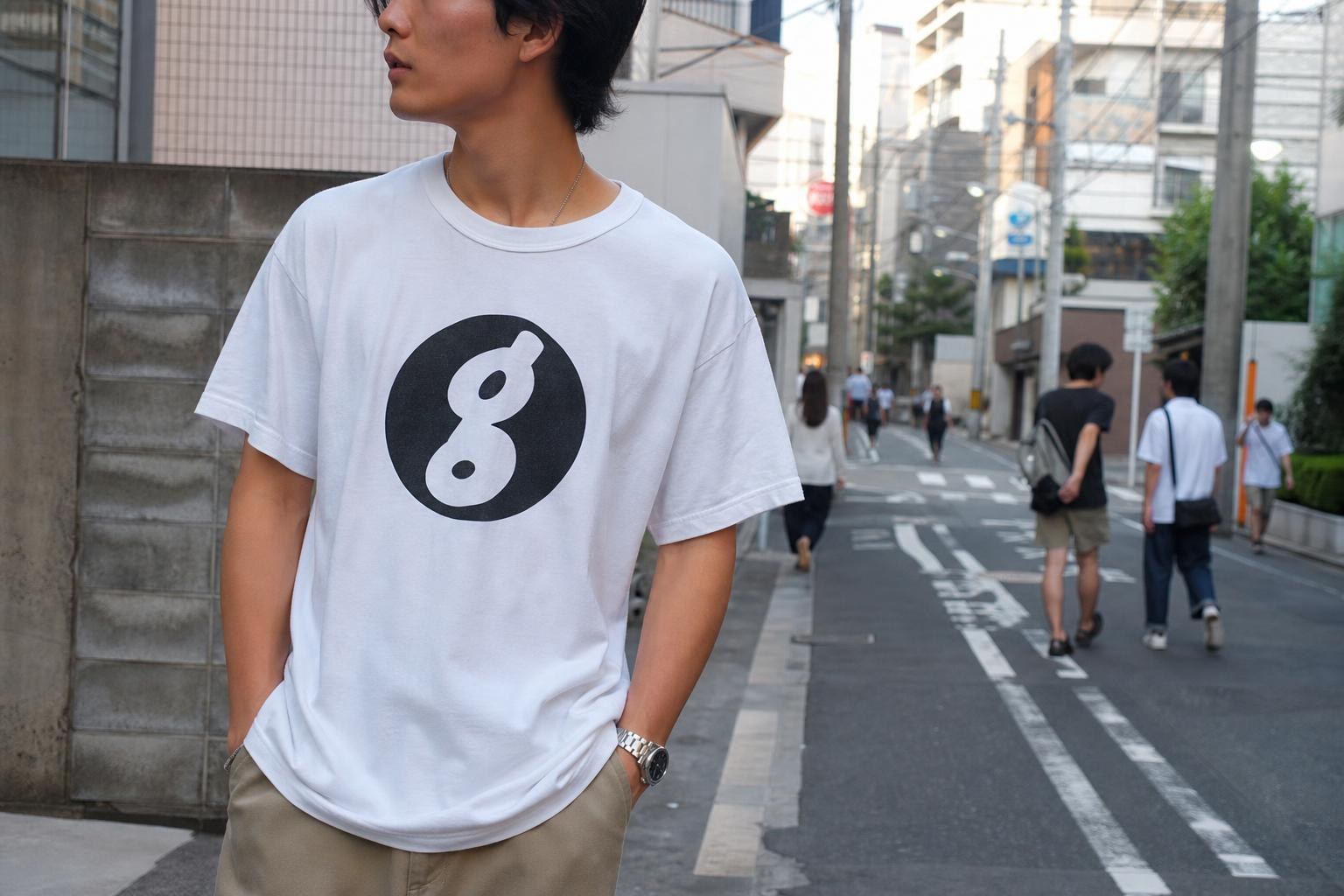
Few garments carry the weight of an entire subculture the way a single stenciled t-shirt can. In the early 1990s, a simple piece of cotton printed with blocky, military-style lettering became one of the most coveted items in Japanese fashion, and its influence still ripples through streetwear today. The Goodenough stencil logo tee, created under the direction of Hiroshi Fujiwara, was never meant for mass consumption. It was designed for a small circle of insiders, sold in tiny quantities, and rarely explained to outsiders. That deliberate obscurity is precisely what made it iconic. For collectors and historians of Japanese street fashion, the 90s Goodenough stencil logo t-shirt represents something larger than clothing: it represents an entire philosophy of how to build a brand by refusing to act like one. Understanding where this shirt came from, how it was designed, and why it still commands serious money on the resale market requires tracing a story that runs through Tokyo’s backstreets, London’s club scene, and the birth of a movement that changed how the world thinks about getting dressed. ## The Origins of Hiroshi Fujiwara’s Goodenough Goodenough didn’t emerge from a business plan. It grew out of one man’s restless creativity and an unusually connected social circle. Hiroshi Fujiwara, often called the godfather of Harajuku streetwear, had already spent the late 1980s absorbing punk, hip-hop, and club culture during trips to London and New York. By the time he launched Goodenough around 1990, he had a clear vision: make clothes for himself and his friends, keep production small, and never chase mainstream approval. ### The Birth of Ura-Harajuku Culture The label became a foundational pillar of what journalists and fans would eventually call Ura-Harajuku, or “backstreet Harajuku.” This wasn’t the bright, cosplay-heavy Harajuku that tourists photograph today. Ura-Harajuku referred to a cluster of small shops tucked into the residential side streets behind Meiji-dori, where brands like Goodenough, A Bathing Ape, and Undercover sold limited runs of clothing to a knowing audience. These shops didn’t advertise. They barely had signage. You found them through word of mouth, and that was the point. Fujiwara’s shop operated on a rhythm completely foreign to conventional retail. Stock appeared without announcement, sold out within hours, and was never restocked. The people who wore Goodenough in 1991 or 1992 weren’t following trends. They were part of a community that treated clothing as cultural currency. ### Founding Principles: Anonymity and Exclusivity Fujiwara built Goodenough on a few non-negotiable ideas. First, the brand would never explain itself. There were no press releases, no lookbooks in the traditional sense, and no effort to court magazine editors. Second, production quantities would stay deliberately tiny. A run of fifty shirts was considered generous. Third, the aesthetic would borrow heavily from utilitarian and military design rather than high fashion. This approach created a feedback loop of desirability. Because so few pieces existed, owning one signaled insider knowledge. Because the brand never promoted itself, discovering it felt like uncovering a secret. Fujiwara understood something that most fashion brands in the early 1990s did not: scarcity, paired with genuine quality and taste, generates more loyalty than any advertising campaign. ## Design Evolution of the Stencil Logo The stencil logo is the single most recognizable element of the Goodenough brand, and its design didn’t happen by accident. It was a deliberate aesthetic choice rooted in references that Fujiwara had been absorbing for years. ### Military and Industrial Aesthetic Influences The stencil typeface used on Goodenough tees draws directly from the lettering found on military cargo crates, ammunition boxes, and surplus equipment. This wasn’t a novel reference in fashion, but Fujiwara’s application of it was unusually restrained. Where other designers might have layered military motifs with additional graphics, patches, or distressing, Goodenough kept it stripped back. The word itself, printed in that rough, broken-letter stencil style, was the entire design. This minimalism connected to a broader interest in workwear and military surplus that ran through early 1990s Japanese street culture. Fujiwara and his peers were shopping at surplus stores, collecting vintage military jackets, and treating functional garments as style objects. The stencil logo was a distillation of that sensibility into its purest graphic form: no decoration, no irony, just a word stamped onto cotton the way a serial number gets stamped onto a crate. ### Typography and Visual Identity What made the Goodenough stencil work so well was its typographic discipline. The letterforms were consistent across seasons, with only minor variations in scale and placement. Some shirts featured the logo large across the chest. Others placed it smaller, almost like a maker’s mark. The color palette stayed narrow: black on white, white on black, occasionally olive or navy. This consistency gave the brand a visual identity that was instantly readable from across a room, even without traditional branding elements like a swoosh or a monogram. The stencil itself became the logo, the brand identity, and the design all at once. It was a remarkably efficient piece of graphic communication, and it set a template that dozens of Japanese streetwear brands would follow throughout the decade. ## Impact on 1990s Streetwear and Beyond Goodenough’s influence extended far beyond its tiny production runs. The brand’s operational model and design philosophy became a blueprint for an entire generation of Japanese labels. ### Pioneering the Limited Drop Model The concept of the “drop” – releasing small quantities of product at unpredictable intervals – is now standard practice for brands from Supreme to Nike. In the early 1990s, this wasn’t a strategy anyone had a name for. Fujiwara simply made what he wanted, when he wanted, in whatever quantity felt right. There was no seasonal calendar, no wholesale distribution, and no effort to scale. What happened organically at Goodenough became codified into a business model by the brands that followed. The psychological mechanics are straightforward: limited supply creates urgency, urgency creates lines, lines create visibility, and visibility creates desire among people who weren’t even in line. Fujiwara didn’t invent artificial scarcity as a concept, but his execution of it through Goodenough was among the earliest and most influential examples in streetwear. ### Influence on A Bathing Ape and Neighborhood Two of the biggest names to emerge from Ura-Harajuku, Nigo’s A Bathing Ape and Shinsuke Takizawa’s Neighborhood, both owe a direct debt to Goodenough. Nigo was a protégé of Fujiwara’s, and the early BAPE model of limited releases, no advertising, and backstreet retail was essentially the Goodenough playbook with a different logo. Takizawa, meanwhile, shared Fujiwara’s love of military and motorcycle culture and built Neighborhood’s identity around a similar commitment to subcultural authenticity. The stencil tee itself became a kind of archetype. You can see its DNA in the bold, graphic-forward t-shirts that defined mid-1990s Japanese streetwear. The idea that a simple printed tee could carry the full weight of a brand’s identity, without needing elaborate graphics or celebrity endorsements, traces directly back to what Fujiwara did with Goodenough. ## Identifying Authentic Vintage Goodenough Pieces For anyone hunting for original 90s Goodenough stencil logo tees, authentication is a real challenge. The brand’s small production runs mean there aren’t comprehensive databases of every piece ever made, and the simplicity of the design makes counterfeiting relatively easy. ### Tag Chronology and Manufacturing Details Authentic Goodenough pieces from the early to mid-1990s typically feature specific tag characteristics that changed over the years: – Early pieces (roughly 1990-1993) often used simple woven labels with minimal information – Mid-decade shirts introduced more structured tags with “Made in Japan” designations and care instructions in Japanese – Late 1990s pieces sometimes carried collaboration tags or sub-label branding like “GDC” (Goodenough Don’t Care) Print quality is another tell. Genuine stencil prints from this era have a particular weight and texture that differs from modern screen printing. The ink sits on the fabric in a way that’s difficult to replicate cheaply, and authentic pieces that have been washed dozens of times develop a specific type of cracking and fading that counterfeiters struggle to imitate convincingly. ### The Resale Market and Collector Demand Prices for authentic Goodenough stencil tees have climbed steadily over the past decade. A shirt that might have sold for 5,000 yen at retail in 1994 can now fetch anywhere from $300 to over $1,000 on platforms like Yahoo Japan Auctions, Grailed, or specialist vintage dealers. Rare colorways, collaboration pieces, or shirts with confirmed provenance command even higher prices. The collector market for these shirts overlaps heavily with the broader vintage Japanese streetwear scene, where pieces from BAPE, Undercover, Number (N)ine, and WTAPS from the same era are equally sought after. Condition matters enormously. A deadstock Goodenough tee with original tags is a genuinely rare find in 2026, and collectors treat such pieces more like artifacts than clothing. ## The Lasting Legacy of the Stencil T-Shirt The Goodenough stencil tee matters because it proved something that the fashion industry was slow to accept: you don’t need scale to have influence. Fujiwara built one of the most respected names in streetwear history by doing the opposite of what every business textbook recommends. He kept things small, refused to explain his work, and trusted that the right people would find it. That stencil logo, with its rough edges and military plainness, became a symbol of a particular approach to creativity: make something good enough that it speaks for itself, then resist the urge to shout about it. The Goodenough stencil logo shirt from the 90s remains a touchstone for anyone interested in how streetwear became a global force, and its influence shows no sign of fading. If you’re a collector, a designer, or just someone who cares about the history behind the clothes you wear, this is one of the stories worth knowing inside and out.
The History of the 90s Goodenough Stencil Logo T-Shirt
 SHIRTS

コメント